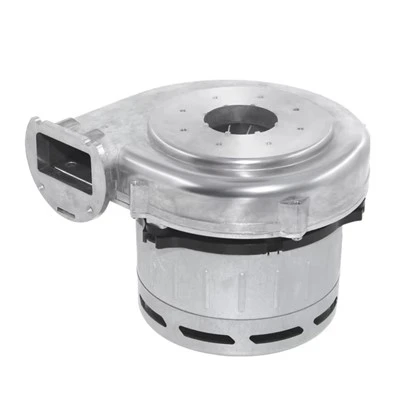
Alright, folks! Today, I wanna chat about the materials used to make a peripheral bypass brushless blower. As a supplier of these bad boys, I've got some insider knowledge to share with you.
Let's start with the basics. A peripheral bypass brushless blower is a pretty nifty piece of equipment. It's used in a bunch of different applications, like ventilation systems, industrial drying, and even in some high - end home appliances. The key to its performance lies not only in its design but also in the materials that go into making it.
Motor Components
The motor is the heart of a brushless blower. In a peripheral bypass brushless blower, we use high - quality neodymium magnets. Why neodymium? Well, these magnets are super strong. They can generate a powerful magnetic field, which is essential for the motor to spin efficiently. This means that the blower can run at high speeds and deliver a decent amount of air pressure. You might be thinking, "But aren't strong magnets expensive?" Yeah, they are, but the long - term benefits in terms of performance and energy efficiency are totally worth it.


The stator of the motor is usually made of laminated silicon steel. Laminating the steel helps to reduce eddy current losses. Eddy currents are those pesky little currents that can be induced in the metal and cause it to heat up. By using laminated silicon steel, we can keep the motor cool and running smoothly. It's a smart material choice that improves the overall efficiency of the blower.
Impeller Materials
The impeller is another crucial part of the blower. It's responsible for moving the air. We typically use high - strength plastic, like polycarbonate, to make the impeller. Polycarbonate has some great properties. It's lightweight, which means the motor doesn't have to work as hard to spin the impeller. At the same time, it's incredibly tough. It can withstand the high speeds and forces involved in the blower's operation without cracking or breaking.
Some of our high - end models, especially the 230V Wet Dry BLDC Blower, might use an aluminum impeller. Aluminum is a great conductor of heat, so it helps to keep the impeller cool. It also has good corrosion resistance, which is important if the blower is going to be used in wet or humid environments.
Housing and Casing
The housing and casing of the blower need to be sturdy and protective. We use a combination of materials here. For the outer casing, we often go with a robust thermoplastic. Thermoplastics are easy to mold into the complex shapes required for the blower's design. They're also resistant to impacts and chemicals, which is important for long - term durability.
Inside the housing, we may use a layer of sound - absorbing material. This helps to reduce the noise levels of the blower. A quiet blower is always a plus, whether it's for a home or an industrial setting. We use a special kind of acoustic foam that can effectively dampen the sound waves produced by the motor and the moving parts.
Electrical Components
When it comes to the electrical components, we use high - quality copper wires. Copper is an excellent conductor of electricity. It has low resistance, which means less energy is wasted as heat. This not only improves the efficiency of the blower but also extends the lifespan of the electrical components.
The printed circuit board (PCB) in the blower is usually made of a fiberglass - epoxy composite. This material provides good electrical insulation and is also resistant to heat and moisture. It's an important part of the blower's control system, as it houses all the electronic components that regulate the motor's speed and operation.
Bearing Materials
The bearings in the blower are critical for smooth operation. We use high - precision ball bearings made of steel. These bearings are designed to handle high speeds and loads. They have a low coefficient of friction, which means they require less energy to rotate. This helps to improve the overall efficiency of the blower.
In some cases, we use ceramic bearings in our 48V High Pressure BLDC Blower. Ceramic bearings are even better at handling high temperatures and high speeds. They're also more resistant to corrosion, which makes them a great choice for demanding applications.
Air Duct and Connectors
The air duct is an important part of the blower system. We use flexible and durable materials for the air duct, such as rubber or polyurethane. These materials can bend and twist without losing their shape or integrity. They also have good air - tightness, which ensures that the air is delivered efficiently from the blower to the desired location.
The connectors used to attach the air duct to the blower and other components are usually made of metal or high - strength plastic. They need to be able to withstand the pressure and vibrations of the blower's operation. A good connection is essential to prevent air leaks and ensure the proper functioning of the entire system.
High - Pressure Applications
For our High Pressure Air Blower, we take the material selection to the next level. In addition to the high - strength materials mentioned above, we reinforce the impeller and the housing. The impeller may have additional ribs or a thicker design to handle the increased pressure. The housing is made of a more rigid material, like cast aluminum, to prevent deformation under high pressure.
Why Our Materials Matter
The materials we choose for our peripheral bypass brushless blowers are not random. Each one is carefully selected to ensure the best performance, reliability, and energy efficiency. We understand that our customers rely on our blowers for their operations, whether it's a small home project or a large - scale industrial application.
By using high - quality materials, we can offer blowers that have a long lifespan. This means less downtime and lower replacement costs for our customers. Our blowers are also more energy - efficient, which can lead to significant cost savings over time. And let's not forget about the performance. With the right materials, our blowers can deliver high air pressure and flow rates, making them suitable for a wide range of applications.
Let's Talk Business
If you're in the market for a peripheral bypass brushless blower, I'd love to talk to you. We've got a great range of products, each designed with the best materials and the latest technology. Whether you need a 230V Wet Dry BLDC Blower, a High Pressure Air Blower, or a 48V High Pressure BLDC Blower, we've got you covered.
Just reach out to us, and we can start a conversation about your specific needs. We'll work with you to find the perfect blower solution for your application. Don't miss out on the opportunity to upgrade your ventilation or air - moving system with our high - quality brushless blowers.
References
- "Engineering Materials Handbook", Edited by ASM International
- "Principles of Electric Machine and Power Electronics", P. C. Sen