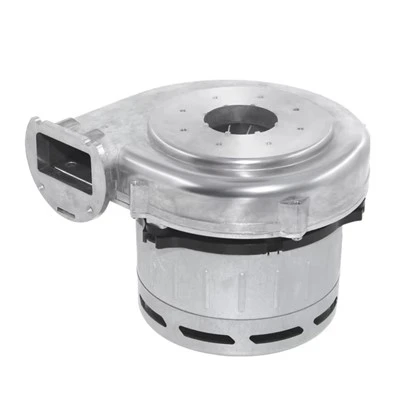
Hey there! As a supplier of BLDC blowers, I often get asked about the speed control methods of these nifty devices. So, I thought I'd put together this blog post to break it all down for you.
Understanding BLDC Blowers
First off, let's quickly go over what a BLDC blower is. BLDC stands for Brushless Direct Current. Unlike traditional brushed DC motors, BLDC motors don't have brushes, which means less wear and tear, higher efficiency, and longer lifespan. BLDC blowers are widely used in various applications, from industrial vacuum cleaners to high - pressure ventilation systems. We offer some great products like the 800W High Pressure BLDC Blower and the BLDC Blower for Industrial Vacuum Cleaner.


Why Speed Control Matters
Speed control is crucial for BLDC blowers for several reasons. In industrial applications, you might need to adjust the airflow according to the specific task at hand. For example, in a dust collection system, you may need a high - speed airflow to pick up large debris, but a lower speed for more delicate operations. In HVAC systems, speed control helps in maintaining a comfortable indoor environment by adjusting the air circulation.
Speed Control Methods
Pulse Width Modulation (PWM)
PWM is one of the most common speed control methods for BLDC blowers. It works by varying the width of the electrical pulses sent to the motor. When you increase the pulse width, the average voltage applied to the motor increases, which in turn increases the motor's speed. Conversely, decreasing the pulse width reduces the average voltage and slows down the motor.
The advantage of PWM is its simplicity and efficiency. It allows for precise control of the motor speed and can be easily implemented using a microcontroller. Most modern BLDC blower controllers use PWM because it's cost - effective and reliable. For instance, our 350w High Pressure BLDC Blower can be effectively controlled using PWM.
Voltage Control
Another straightforward method is voltage control. By changing the supply voltage to the BLDC motor, you can directly affect its speed. A higher voltage will make the motor spin faster, while a lower voltage will slow it down.
However, voltage control has its limitations. It's not as precise as PWM, especially at lower speeds. Also, continuously changing the supply voltage can be energy - inefficient, as the excess voltage is often dissipated as heat. But in some simple applications where precision isn't critical, voltage control can be a viable option.
Frequency Control
Frequency control is mainly used in applications where the BLDC motor is driven by an inverter. The inverter converts DC power to AC power with a variable frequency. By changing the frequency of the AC power, you can control the speed of the BLDC motor.
This method is commonly used in high - power applications, such as large industrial blowers. It offers good speed control over a wide range and can be very efficient. However, it requires more complex control circuitry and is generally more expensive than PWM or voltage control.
Sensor - Based vs. Sensorless Control
When it comes to speed control, there are also two main approaches: sensor - based and sensorless.
Sensor - Based Control
Sensor - based control uses sensors, such as Hall effect sensors, to detect the position of the rotor in the motor. This information is then used to precisely control the timing of the electrical pulses sent to the motor windings, ensuring smooth and efficient operation.
Sensor - based control offers high accuracy and is suitable for applications where precise speed control is required. However, the sensors add to the cost and complexity of the system, and they can also be prone to failure.
Sensorless Control
Sensorless control, as the name suggests, doesn't use external sensors to determine the rotor position. Instead, it relies on the back - electromotive force (EMF) generated by the motor to estimate the rotor position.
Sensorless control is more cost - effective and reliable since there are no sensors to fail. It's also more compact, which is beneficial in applications where space is limited. However, it can be less accurate than sensor - based control, especially at low speeds.
Choosing the Right Speed Control Method
When choosing a speed control method for your BLDC blower, you need to consider several factors.
- Application Requirements: If you need precise speed control for a critical application, such as a medical device, PWM with sensor - based control might be the best choice. For less demanding applications, like a small ventilation fan, voltage control or sensorless PWM could be sufficient.
- Cost: Cost is always a factor. If you're on a tight budget, simpler methods like voltage control or sensorless control might be more appealing. However, if you can afford it, more advanced methods like frequency control or sensor - based PWM can offer better performance.
- Efficiency: Energy efficiency is important, especially for large - scale or continuous - operation applications. Methods like PWM and frequency control are generally more efficient than voltage control.
Conclusion
So, there you have it! The speed control of BLDC blowers is a complex but fascinating topic. Whether you choose PWM, voltage control, or frequency control, and whether you go for sensor - based or sensorless control, it all depends on your specific needs.
As a BLDC blower supplier, we're here to help you find the best solution for your application. If you're interested in our products or have any questions about speed control methods, feel free to reach out to us for procurement and further discussions.
References
- Electric Motor Handbook, Second Edition by Arnold E. Fitzgerald, Charles Kingsley Jr., and Stephen D. Umans
- Brushless Permanent - Magnet Motor Design by Ned Mohan