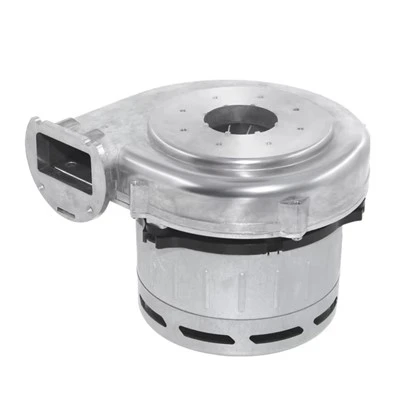
Yo! As a supplier of Tangential By Pass BLDC Blowers, I often get asked about the minimum operating temperature of these bad boys. So, let's dig into it and find out what's the deal with the cold limits of our Tangential By Pass BLDC Blowers.
First off, let's understand what a Tangential By Pass BLDC Blower is. It's a pretty nifty piece of equipment. The tangential design allows for a unique airflow pattern, which is super useful in a bunch of applications. And the brushless DC (BLDC) motor is a game - changer. It's more efficient, has a longer lifespan, and requires less maintenance compared to traditional motors.
Now, when it comes to the minimum operating temperature, several factors come into play. One of the main things to consider is the lubrication in the motor bearings. Just like a car engine needs the right oil to run smoothly in cold weather, the bearings in our blower need proper lubrication. At low temperatures, the lubricant can get thick. If it gets too thick, it can increase the friction in the bearings. This increased friction not only makes the motor work harder but can also lead to premature wear and tear. So, typically, the lubricants used in these blowers have a certain low - temperature limit beyond which their performance starts to degrade.


The electrical components in the blower, such as the PCB (Printed Circuit Board), also have their own thermal requirements. The solder joints on the PCB can become brittle at extremely low temperatures. If they become too brittle, there's a risk of them cracking and causing electrical failures.
Another aspect is the plastic parts used in the blower housing or other components. Most plastics become stiffer and more prone to cracking in cold conditions. If the blower's housing material is not designed to withstand low temperatures, it can crack, which may affect the blower's performance and safety.
Based on our experience and the materials and components we use, the minimum operating temperature for our Tangential By Pass BLDC Blowers is usually around - 20°C (- 4°F). But this can vary depending on the specific model and its intended application.
For example, if you're using the blower in a high - altitude, cold - climate place like a mountain observatory, you might need a blower that can handle even lower temperatures. In such cases, we can customize the blower to use special lubricants, more cold - resistant plastics, and electrical components that are designed to work in extremely cold environments.
Now, I know some of you might be thinking, "Why would I need to use a blower in such cold conditions?" Well, there are many applications where these blowers are used even in cold environments. For instance, in some industrial refrigeration systems, a blower is needed to circulate air even at low temperatures to maintain the right cooling efficiency.
If you're in the market for a high - performance blower, you might be interested in our High Pressure Air Blower. It's a great option for applications that require a strong airflow. And if you need more pressure, our 26kPa High Pressure BLDC Blower is the one to go for. For those who need a more compact solution, check out our High Prssure Small Centrifugal Blower.
We've spent a lot of time testing and improving our blowers to make sure they perform well in a wide range of temperatures. Our team of engineers is always working on new ways to enhance the cold - weather performance of our products.
If you're thinking about purchasing a Tangential By Pass BLDC Blower and have questions about the minimum operating temperature or any other aspect of our products, we're here to help. We can provide you with all the technical details, and if needed, we can even arrange a custom solution for your specific requirements. Don't hesitate to reach out and start a purchase negotiation. Let's find the perfect blower for your needs together!
References
- Manufacturer's technical specifications for BLDC motors
- Industry standards for blower performance in cold environments
- Research studies on the effects of low temperatures on electrical and mechanical components