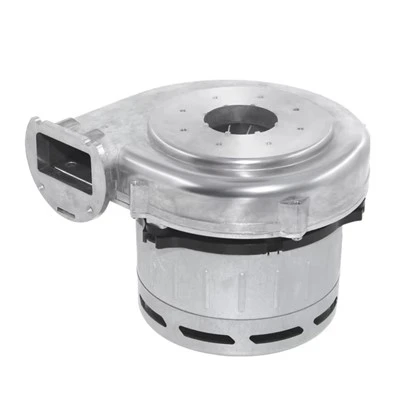
Hey there! As a supplier of vacuum motors, I often get asked about the different bearing types used in these motors. So, I thought I'd write this blog to break it all down for you.
Let's start by understanding what bearings are and why they're so important in a vacuum motor. Bearings are components that reduce friction between moving parts. In a vacuum motor, they support the rotating shaft and ensure smooth operation. Without proper bearings, the motor would experience excessive wear and tear, leading to a shorter lifespan and reduced performance.
There are several types of bearings commonly used in vacuum motors, and each has its own set of advantages and disadvantages.
Ball Bearings
Ball bearings are probably the most widely used type in vacuum motors. They consist of small metal balls held in place by a cage, which separates the balls and allows them to roll freely. The balls provide a low-friction contact between the inner and outer races of the bearing.
One of the main advantages of ball bearings is their high-speed capability. They can handle high rotational speeds without generating too much heat, which is crucial for vacuum motors that often need to spin at very high RPMs. They also have relatively low noise levels, making them a great choice for applications where quiet operation is desired.
However, ball bearings have some limitations. They're not as good at handling heavy radial loads compared to other types of bearings. If the motor experiences a lot of side forces or vibrations, the balls can wear out more quickly.


Sleeve Bearings
Sleeve bearings, also known as journal bearings, are another common option. They consist of a smooth cylindrical sleeve that fits around the shaft. The sleeve is usually made of a material with good lubricating properties, such as bronze or a special polymer.
Sleeve bearings are known for their simplicity and low cost. They're easy to manufacture and install, which makes them a popular choice for budget-friendly vacuum motors. They also have good shock absorption capabilities, which means they can handle some level of vibrations and impacts without getting damaged.
On the downside, sleeve bearings have a higher friction coefficient compared to ball bearings. This means they generate more heat at high speeds, which can limit their maximum operating speed. They also require proper lubrication to function properly, and if the lubrication runs out, the bearing can wear out quickly.
Roller Bearings
Roller bearings are similar to ball bearings, but instead of balls, they use cylindrical or tapered rollers. These rollers provide a larger contact area with the races, which allows them to handle heavier radial and axial loads.
Roller bearings are a great choice for vacuum motors that need to handle high loads or operate in harsh environments. They're more durable than ball bearings and can withstand more wear and tear. They also have better performance at high temperatures, which is important for motors that generate a lot of heat.
However, roller bearings are more expensive than ball and sleeve bearings. They're also larger and heavier, which can be a drawback in applications where space and weight are limited.
Which Bearing Type is Right for Your Vacuum Motor?
The choice of bearing type depends on several factors, including the motor's intended application, operating conditions, and budget.
If you're looking for a high-speed, quiet motor for a household vacuum cleaner, ball bearings are probably your best bet. They offer a good balance between performance and cost, and they can handle the typical loads and speeds of a home vacuum. You can check out our Small High Pressure BLDC Vacuum Motor which uses high-quality ball bearings for optimal performance.
For a more budget-friendly option, sleeve bearings might be the way to go. They're a great choice for less demanding applications or for motors that don't need to operate at extremely high speeds. Our BLDC Motor for Vacuum Cleaner offers a cost-effective solution with sleeve bearings.
If you need a motor that can handle heavy loads or operate in harsh conditions, roller bearings are the best option. They provide the durability and performance you need, although they come at a higher cost. Our 500W Brushless Vacuum Motor is equipped with roller bearings for maximum reliability.
Conclusion
In conclusion, the bearing type of a vacuum motor plays a crucial role in its performance, durability, and cost. Each type of bearing has its own unique characteristics, and the right choice depends on your specific requirements.
As a vacuum motor supplier, we understand the importance of choosing the right bearing for your motor. We offer a wide range of vacuum motors with different bearing types to meet the needs of various applications. Whether you're looking for a high-speed, quiet motor or a heavy-duty motor for industrial use, we've got you covered.
If you're interested in learning more about our vacuum motors or have any questions about bearing types, feel free to reach out to us. We're here to help you find the perfect motor for your needs and can assist you in making the right choice. Let's start a conversation and see how we can work together to get you the best vacuum motor solution.
References
- Machinery's Handbook, 31st Edition
- Bearing Engineering Handbook