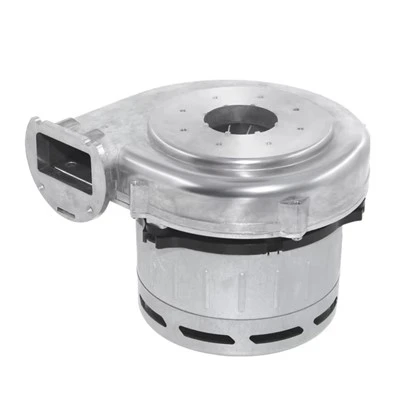
In the realm of industrial and commercial ventilation systems, the Tangential By Pass BLDC (Brushless Direct Current) Blower has emerged as a crucial component, offering a unique combination of efficiency, performance, and reliability. As a leading supplier of Tangential By Pass BLDC Blowers, I often receive inquiries about the air volume of these blowers. In this blog post, I will delve into the factors that influence the air volume of a typical Tangential By Pass BLDC Blower and provide some insights into how to select the right blower for your specific application.
Understanding Tangential By Pass BLDC Blowers
Before we discuss the air volume, let's first understand what a Tangential By Pass BLDC Blower is. This type of blower is designed with a tangential airflow path, which allows it to generate a high-pressure airflow while maintaining a relatively low noise level. The BLDC motor technology used in these blowers offers several advantages over traditional brushed motors, including higher efficiency, longer lifespan, and better speed control.
Tangential By Pass BLDC Blowers are commonly used in a variety of applications, such as air conditioning systems, air purifiers, and industrial ventilation systems. They are particularly suitable for applications where a high-pressure airflow is required in a limited space.
Factors Affecting the Air Volume of a Tangential By Pass BLDC Blower
The air volume of a Tangential By Pass BLDC Blower is influenced by several factors, including the blower's design, the motor's power, and the operating conditions. Let's take a closer look at each of these factors:
Blower Design
The design of the blower plays a crucial role in determining its air volume. Factors such as the impeller diameter, the number of blades, and the shape of the volute casing can all affect the blower's performance. A larger impeller diameter generally results in a higher air volume, as it allows the blower to move more air per revolution. Similarly, a greater number of blades can increase the air volume by providing more surface area for the air to interact with.
The shape of the volute casing also affects the air volume. A well-designed volute casing can help to guide the airflow and reduce turbulence, resulting in a more efficient and higher-volume airflow.


Motor Power
The power of the BLDC motor is another important factor that affects the air volume of the blower. A more powerful motor can drive the impeller at a higher speed, resulting in a higher air volume. However, it's important to note that the motor's power should be matched to the blower's design to ensure optimal performance. Using a motor that is too powerful can lead to excessive noise and vibration, while using a motor that is too weak can result in a lower air volume.
Operating Conditions
The operating conditions, such as the inlet and outlet pressures, the temperature, and the altitude, can also affect the air volume of the blower. For example, a higher inlet pressure or a lower outlet pressure can increase the air volume, while a higher temperature or a higher altitude can decrease the air volume. It's important to consider these operating conditions when selecting a blower to ensure that it can meet the requirements of your specific application.
Typical Air Volume Ranges of Tangential By Pass BLDC Blowers
The air volume of a typical Tangential By Pass BLDC Blower can vary widely depending on the factors mentioned above. Generally, these blowers can have an air volume ranging from a few cubic meters per hour (m³/h) to several hundred m³/h.
For small-scale applications, such as air purifiers and small air conditioning units, blowers with an air volume of around 10 - 50 m³/h may be sufficient. For larger industrial ventilation systems, blowers with an air volume of 100 - 500 m³/h or more may be required.
It's important to note that these are just typical ranges, and the actual air volume of a blower will depend on its specific design and operating conditions. When selecting a blower, it's recommended to consult the manufacturer's specifications to determine the exact air volume that the blower can provide.
Selecting the Right Tangential By Pass BLDC Blower for Your Application
When selecting a Tangential By Pass BLDC Blower for your application, it's important to consider several factors, including the required air volume, the pressure requirements, the noise level, and the power consumption. Here are some tips to help you make the right choice:
Determine the Required Air Volume
The first step is to determine the required air volume for your application. This will depend on the size of the space that needs to be ventilated, the type of contaminants that need to be removed, and the desired airflow rate. Once you have determined the required air volume, you can select a blower that can provide this volume under the specified operating conditions.
Consider the Pressure Requirements
In addition to the air volume, you also need to consider the pressure requirements of your application. Some applications may require a high-pressure airflow to overcome resistance in the ductwork or to achieve a certain level of ventilation. Make sure to select a blower that can provide the required pressure while maintaining the desired air volume.
Evaluate the Noise Level
Noise level is an important consideration, especially in applications where quiet operation is required. Tangential By Pass BLDC Blowers are generally known for their low noise levels, but it's still important to evaluate the noise level of the blower before making a decision. Look for blowers that are designed with noise-reducing features, such as a smooth impeller design and a well-insulated motor.
Assess the Power Consumption
Power consumption is another important factor to consider, especially in applications where energy efficiency is a priority. BLDC motors are generally more energy-efficient than traditional brushed motors, but the power consumption of the blower will still depend on its design and operating conditions. Look for blowers that are designed to operate at a high efficiency and that can provide the required air volume and pressure with minimal power consumption.
Our Product Range
As a supplier of Tangential By Pass BLDC Blowers, we offer a wide range of products to meet the diverse needs of our customers. Our blowers are designed with the latest technology and high-quality materials to ensure reliable performance and long service life.
We also offer Two Stage High Pressure BLDC Blower and 26kPa High Pressure BLDC Blower for applications that require a higher pressure airflow. You can explore our Tangential By Pass BLDC Blower product range to find the right blower for your specific application.
Contact Us for Procurement and Consultation
If you are interested in our Tangential By Pass BLDC Blowers or need more information about our products, please feel free to contact us. Our team of experts is ready to assist you in selecting the right blower for your application and to provide you with all the necessary technical support.
We look forward to the opportunity to work with you and to help you achieve your ventilation goals. Whether you are a small business or a large industrial enterprise, we have the products and expertise to meet your needs.
References
- ASHRAE Handbook - Fundamentals. American Society of Heating, Refrigerating and Air-Conditioning Engineers.
- Industrial Ventilation: A Manual of Recommended Practice. American Conference of Governmental Industrial Hygienists.