Hey there! As a supplier of BLDC motors, I've seen firsthand how crucial stator design is for these motors. In this blog, I'm gonna dive into how the stator design affects a BLDC motor and why it matters to you.
Let's start with the basics. A BLDC (Brushless Direct Current) motor is a type of electric motor known for its high efficiency, long lifespan, and low maintenance. It consists of two main parts: the stator and the rotor. The stator is the stationary part of the motor that contains the windings, while the rotor is the rotating part with permanent magnets.
Number of Poles in the Stator
One of the key aspects of stator design is the number of poles. The poles in the stator create a magnetic field that interacts with the magnetic field of the rotor to produce rotation. A higher number of poles generally means more torque at lower speeds. This is because more poles allow for a greater number of magnetic interactions between the stator and the rotor.
For example, if you're using a BLDC motor in an application where you need a lot of torque right from the start, like an electric vehicle or a conveyor belt, a stator with a higher number of poles would be a good choice. On the other hand, if you need high - speed operation, a lower number of poles might be more suitable. Our 350W 500W 750W BLDC Motor comes in different pole configurations to meet various application requirements.
Stator Winding Configuration
The winding configuration of the stator also has a big impact on the motor's performance. There are two common types of winding configurations: single - phase and three - phase.
Three - phase winding is more commonly used in BLDC motors because it offers several advantages. It provides a more constant torque output compared to single - phase winding. This is because the three - phase currents are out of phase with each other, creating a rotating magnetic field that is smoother and more stable. Our 3 Phase BLDC Brushless DC Motor uses a three - phase winding configuration, which results in better efficiency and less vibration.
The way the windings are arranged in the stator slots also matters. There are different slot - winding combinations, such as distributed windings and concentrated windings. Distributed windings spread the coils over multiple slots, which helps in reducing harmonic distortion and improving the motor's power factor. Concentrated windings, on the other hand, are more compact and can be used in applications where space is limited.
Stator Material
The material used for the stator plays a significant role in the motor's performance. The stator core is usually made of laminated steel. The laminations help in reducing eddy current losses, which are a type of electrical loss that can generate heat and reduce the motor's efficiency.

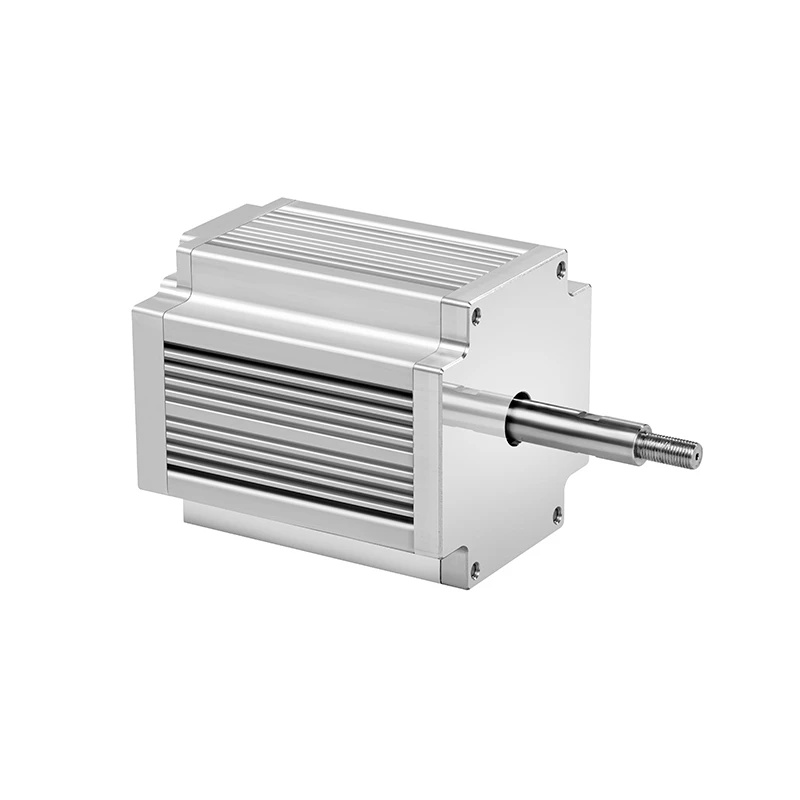
High - quality steel laminations with low core loss properties are preferred for BLDC motors. Another factor is the insulation of the windings. Good insulation materials prevent short - circuits and ensure the reliability and safety of the motor. When we manufacture our 90mm OD 220V BLDC Motor, we use top - notch stator materials to guarantee high performance.
Slot Design
The slot design in the stator affects the motor in multiple ways. The shape and size of the slots determine how the windings are placed. A well - designed slot can reduce the leakage flux, which is the magnetic flux that doesn't contribute to the motor's rotation. Reducing leakage flux improves the motor's efficiency.
The slot opening also matters. A smaller slot opening can reduce the air - gap reluctance, which in turn increases the motor's torque density. However, a very small slot opening can make it difficult to insert the windings during the manufacturing process. So, there needs to be a balance between performance and manufacturability.
Impact on Motor Efficiency
All these stator design factors combined have a huge impact on the motor's efficiency. A well - designed stator with the right number of poles, proper winding configuration, high - quality materials, and efficient slot design can significantly improve the motor's efficiency. This means less energy consumption, lower operating costs, and a smaller environmental footprint.
For industrial applications, where motors run for long hours, even a small improvement in efficiency can lead to substantial savings over time. And for battery - powered applications, such as electric bicycles or drones, a more efficient motor means longer battery life.
Impact on Torque and Speed
As I mentioned earlier, the stator design affects the motor's torque and speed characteristics. The number of poles and the winding configuration determine the torque - speed curve of the motor. A motor with a design optimized for high - torque at low - speed applications will have a different torque - speed curve compared to a motor designed for high - speed operation.
If you need a motor for a high - precision application, like a robotic arm, the stator design can be adjusted to provide smooth torque delivery at various speeds. This ensures accurate movement and better control.
Why It Matters to You
Whether you're in the manufacturing, automotive, or consumer electronics industry, the performance of the BLDC motor can make or break your product. A well - designed stator means better performance, reliability, and efficiency, which translates into a better end - product for your customers.
When you choose our BLDC motors, you're getting the benefit of our years of experience in stator design and motor manufacturing. We've fine - tuned our designs to meet the diverse needs of our customers, from high - power industrial applications to small - scale consumer products.
Let's Talk
If you're interested in our BLDC motors or have specific requirements for your application, don't hesitate to reach out. We're here to help you find the perfect motor for your needs and can provide you with all the technical support you need. Whether you need more information about our 350W 500W 750W BLDC Motor, 3 Phase BLDC Brushless DC Motor, or 90mm OD 220V BLDC Motor, we're just a message away.
References
- Chapman, S. J. (2012). Electric Machinery Fundamentals. McGraw - Hill Education.
- Krause, P. C., Wasynczuk, O., & Sudhoff, S. D. (2013). Analysis of Electric Machinery and Drive Systems. Wiley.