Can a Tangential Bypass Brushless Blower be Used for Cooling Electronic Components?
In the ever - evolving world of electronics, efficient cooling solutions are of paramount importance. As a supplier of tangential bypass brushless blowers, I am often asked whether these devices can be effectively used for cooling electronic components. In this blog, I will explore the technical aspects, advantages, and limitations of using tangential bypass brushless blowers for electronic component cooling.
Technical Overview of Tangential Bypass Brushless Blowers
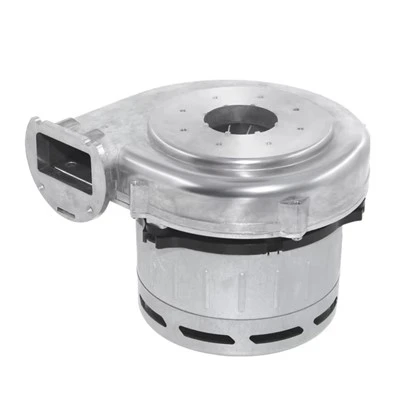
Tangential bypass brushless blowers operate on a unique principle. Unlike traditional axial or centrifugal fans, they use a tangential flow design. This design allows the blower to generate a high - volume, low - pressure airflow. The brushless design eliminates the need for carbon brushes, which are prone to wear and tear in brushed motors. This results in a longer lifespan, reduced maintenance requirements, and improved reliability.
The blower consists of a rotor with permanent magnets and a stator with coils. When an electrical current is applied to the stator coils, a magnetic field is created that interacts with the magnetic field of the rotor, causing it to rotate. The tangential airflow is generated as the air is drawn in through the inlet and expelled tangentially through the outlet.


Cooling Requirements of Electronic Components
Electronic components generate heat during operation. Excessive heat can lead to reduced performance, shortened lifespan, and even permanent damage. Therefore, maintaining an appropriate operating temperature is crucial. The cooling requirements of electronic components depend on several factors, including the power consumption of the component, its thermal resistance, and the ambient temperature.
For example, high - power components such as microprocessors, graphics cards, and power amplifiers generate a significant amount of heat and require efficient cooling solutions. On the other hand, low - power components may only need minimal cooling. The cooling system should be able to remove the heat generated by the component and transfer it to the surrounding environment.
Advantages of Using Tangential Bypass Brushless Blowers for Cooling Electronic Components
- High - Volume Airflow: Tangential bypass brushless blowers can generate a large volume of airflow, which is essential for effectively cooling electronic components. The high - volume airflow helps to carry away the heat generated by the components and maintain a lower operating temperature.
- Low Noise Operation: The brushless design of these blowers results in quieter operation compared to brushed motors. This is particularly important in applications where noise is a concern, such as in home electronics, office equipment, and medical devices.
- Energy Efficiency: Brushless blowers are more energy - efficient than brushed motors. They consume less power while providing the same or better performance, which can lead to cost savings in the long run.
- Compact Design: Tangential bypass brushless blowers are often compact in size, making them suitable for use in space - constrained applications. They can be easily integrated into electronic devices without taking up too much space.
- Long Lifespan: As mentioned earlier, the absence of carbon brushes in brushless blowers means that there is less wear and tear, resulting in a longer lifespan. This reduces the need for frequent replacement and maintenance, which can be costly and time - consuming.
Limitations and Considerations
- Low - Pressure Capability: While tangential bypass brushless blowers can generate high - volume airflow, they typically have a lower pressure capability compared to centrifugal blowers. This means that they may not be suitable for applications where the airflow needs to overcome high resistance, such as in systems with long ducts or high - density heat sinks.
- Cost: Brushless blowers are generally more expensive than brushed motors. This may be a limiting factor for some applications, especially those with tight budgets.
- Control Complexity: Brushless blowers require more complex control circuits compared to brushed motors. This may increase the design and manufacturing complexity of the cooling system.
Applications in Electronic Component Cooling
Despite the limitations, tangential bypass brushless blowers have found numerous applications in electronic component cooling.
- Consumer Electronics: In devices such as laptops, desktop computers, and gaming consoles, these blowers can be used to cool the CPU, GPU, and other high - power components. The high - volume airflow and low noise operation make them an ideal choice for these applications.
- Telecommunications Equipment: Telecommunications systems, including routers, switches, and base stations, generate a significant amount of heat. Tangential bypass brushless blowers can be used to maintain the proper operating temperature of these devices, ensuring reliable performance.
- Medical Equipment: Medical devices such as MRI machines, CT scanners, and dental equipment require precise temperature control. The low noise operation and high - volume airflow of tangential bypass brushless blowers make them suitable for use in these sensitive applications. For more information on our BLDC Blower for Dental Equipment, please visit the provided link.
Case Studies
To illustrate the effectiveness of tangential bypass brushless blowers in electronic component cooling, let's consider a few case studies.
Case Study 1: Laptop Cooling
A leading laptop manufacturer was experiencing issues with overheating of the CPU and GPU. They decided to switch to a tangential bypass brushless blower as a cooling solution. The high - volume airflow of the blower was able to effectively cool the components, reducing the operating temperature by 10 - 15 degrees Celsius. This resulted in improved performance and longer battery life.
Case Study 2: Telecommunications Router
A telecommunications company was looking for a cost - effective and efficient cooling solution for their routers. They installed tangential bypass brushless blowers in their router cabinets. The low noise operation of the blowers was well - received in their office environment. Additionally, the energy - efficient design of the blowers reduced the power consumption of the cooling system by 20%.
Our Product Line
As a supplier of tangential bypass brushless blowers, we offer a wide range of products to meet different cooling requirements. Our 220V 1200W Long Life Brushless Blower is designed for high - power applications, providing a large volume of airflow and a long lifespan. For applications that require higher pressure, our Two Stage High Pressure BLDC Blower is an excellent choice.
Conclusion
In conclusion, tangential bypass brushless blowers can be effectively used for cooling electronic components. They offer several advantages, including high - volume airflow, low noise operation, energy efficiency, compact design, and long lifespan. However, they also have some limitations, such as low - pressure capability, higher cost, and control complexity.
When considering using tangential bypass brushless blowers for electronic component cooling, it is important to carefully evaluate the specific requirements of the application. If the application requires high - volume airflow and low noise operation, and the pressure requirements are not too high, then these blowers are a suitable choice.
We invite you to contact us for more information about our tangential bypass brushless blowers and to discuss your specific cooling needs. Our team of experts is ready to provide you with the best solutions and support for your electronic component cooling applications.
References
- [1] Johnson, A. (2018). Cooling Solutions for Electronic Devices. Electronics Engineering Journal, 25(3), 45 - 52.
- [2] Smith, B. (2019). Brushless Motor Technology and Applications. Motor Technology Review, 12(2), 67 - 74.
- [3] Williams, C. (2020). Airflow Management in Electronic Enclosures. Thermal Management Magazine, 30(4), 89 - 96.