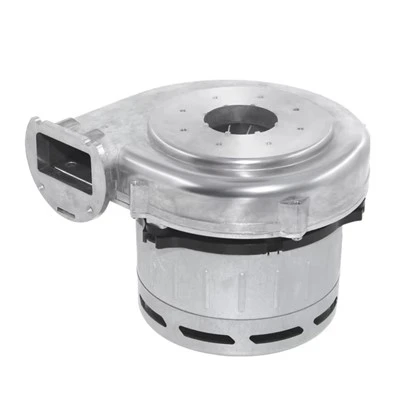
Hey there! As a vacuum motor supplier, I've seen and worked with a whole bunch of different types of vacuum motors over the years. In this blog, I'm gonna break down the main types of vacuum motors out there, so you can have a better idea of what's available and which one might be the best fit for your needs.
1. Brushed DC Motors
Let's start with the classic - brushed DC motors. These motors have been around for ages and are still widely used in many vacuum cleaners. They're relatively simple in design, which makes them cost - effective to produce.
The way a brushed DC motor works is pretty straightforward. It has a rotor (the rotating part) and a stator (the stationary part). The rotor has coils of wire, and the stator has permanent magnets. When an electric current is applied to the coils in the rotor, a magnetic field is created. This magnetic field interacts with the magnetic field of the stator, causing the rotor to spin.
One of the big advantages of brushed DC motors is their high starting torque. This means they can quickly get up to speed, which is great for vacuum cleaners that need to start sucking right away. They're also easy to control, as you can simply adjust the voltage to change the speed of the motor.
However, they do have some drawbacks. The brushes in these motors wear out over time, which means they need to be replaced periodically. This can be a hassle and adds to the long - term cost of using a vacuum cleaner with a brushed DC motor. Also, the brushes can create electrical noise and sparks, which might not be ideal in some environments.
2. Brushless DC (BLDC) Motors
Now, let's talk about brushless DC motors, which are becoming increasingly popular in the vacuum cleaner industry. BLDC motors are a more advanced version of DC motors. Instead of using brushes to transfer electrical current to the rotor, they use an electronic controller.
This electronic controller switches the current to the coils in the rotor at the right time, based on the position of the rotor. This results in a more efficient and reliable motor. BLDC motors have a longer lifespan compared to brushed DC motors because there are no brushes to wear out. They also run quieter and produce less electrical noise.
There are different types of BLDC motors available for vacuum cleaners. For example, you can check out our Small High Pressure BLDC Vacuum Motor. This motor is designed to provide high pressure, which is great for sucking up dirt and debris from different surfaces.
Another great option is our 500W Brushless Vacuum Motor. With a power of 500W, it offers a good balance between performance and energy efficiency. And if you're looking for a motor specifically designed for vacuum cleaners, our BLDC Motor for Vacuum Cleaner is a top - notch choice.
The efficiency of BLDC motors is one of their biggest selling points. They convert a higher percentage of electrical energy into mechanical energy, which means they use less power to achieve the same level of performance as a brushed DC motor. This can lead to significant energy savings over time, which is not only good for your wallet but also for the environment.
3. Universal Motors
Universal motors are another type of motor commonly used in vacuum cleaners. These motors can run on either AC or DC power, which gives them a lot of flexibility. They're basically a type of brushed motor, similar to the brushed DC motors we talked about earlier, but they're designed to work with both types of power sources.
The design of a universal motor allows it to operate at high speeds, which is great for generating strong suction in vacuum cleaners. They're also relatively compact and lightweight, which makes them a good choice for handheld vacuum cleaners or corded upright vacuum cleaners.
However, like brushed DC motors, universal motors have brushes that wear out over time. They also tend to be less energy - efficient compared to BLDC motors. The high - speed operation can also make them a bit noisy, which might be a concern if you're using the vacuum cleaner in a quiet environment.
4. Induction Motors
Induction motors are a type of AC motor that are sometimes used in larger, more heavy - duty vacuum cleaners. They work based on the principle of electromagnetic induction. When an AC current is applied to the stator, it creates a rotating magnetic field. This rotating magnetic field then induces a current in the rotor, which causes the rotor to spin.
One of the main advantages of induction motors is their reliability. They have no brushes, so there's no wear and tear associated with brush replacement. They also have a long lifespan and can handle continuous operation without overheating. Induction motors are very efficient at converting electrical energy into mechanical energy, especially at full load.
On the downside, induction motors are generally larger and heavier than other types of motors. They also have a lower starting torque compared to brushed DC motors, which means they might take a bit longer to get up to speed. This can be a drawback in some vacuum cleaner applications where quick startup is important.
5. Piston Motors
Piston motors are less common in household vacuum cleaners but are used in some industrial and commercial vacuum systems. These motors work by using pistons that move back and forth in cylinders. The movement of the pistons creates a vacuum, which is used to suck in air and dirt.


Piston motors can generate very high pressures, which makes them suitable for applications where you need to suck up large amounts of debris or clean difficult - to - reach areas. They're also very durable and can handle heavy - duty use.
However, they're relatively complex and expensive to manufacture. They also require regular maintenance, such as oil changes and piston ring replacements. And they tend to be quite noisy, which might not be ideal for use in a home environment.
So, there you have it - the main types of vacuum motors. Each type has its own set of advantages and disadvantages, and the right choice depends on your specific needs. If you're looking for a reliable, energy - efficient, and long - lasting motor, I'd definitely recommend checking out our BLDC motors.
If you're in the market for a vacuum motor for your vacuum cleaner or other application, we'd love to hear from you. Whether you're a small - scale manufacturer or a large - scale distributor, we can provide you with high - quality vacuum motors at competitive prices. Just reach out to us, and we can start a discussion about your requirements and how we can help you find the perfect motor for your needs.
References
- "Electric Motors and Drives: Fundamentals, Types and Applications" by Austin Hughes and Bill Drury
- "Motor Technology Handbook" by Various Authors