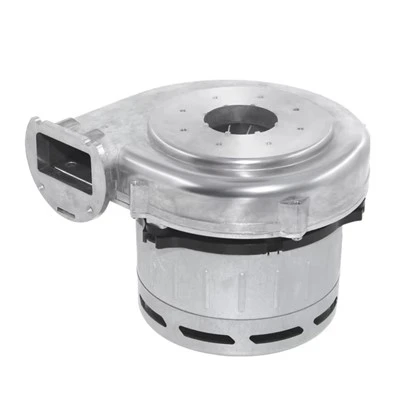
As a supplier of Tangential by pass brushless blowers, I am often asked about the torque - speed characteristic of these remarkable devices. In this blog, I will delve into the details of the torque - speed characteristic of a Tangential by pass brushless blower, exploring its significance, how it works, and its implications for various applications.
Understanding the Basics of Torque and Speed
Before we dive into the torque - speed characteristic of a Tangential by pass brushless blower, it's essential to understand the basic concepts of torque and speed. Torque is the rotational force that causes an object to rotate around an axis. In the context of a blower, torque is what enables the impeller to spin and move air. Speed, on the other hand, refers to the rotational velocity of the impeller, usually measured in revolutions per minute (RPM).
The relationship between torque and speed is crucial in determining the performance of a blower. A blower's ability to generate airflow and pressure depends on how these two factors interact. In general, as the speed of the blower increases, the torque required to maintain that speed also changes.
The Torque - Speed Characteristic of a Tangential by pass Brushless Blower
The torque - speed characteristic of a Tangential by pass brushless blower is a curve that shows the relationship between the torque and the speed of the blower. This curve is typically non - linear and can be divided into different regions, each with its own characteristics.
Starting Region
At the start, when the blower is at rest (0 RPM), the torque required to start the impeller spinning is relatively high. This is because the blower has to overcome the inertia of the impeller and any resistance in the system. As the speed begins to increase, the torque gradually decreases. This initial region is characterized by a steep drop in torque as the speed rises.


Constant - Torque Region
After the initial start - up phase, the blower enters a region where the torque remains relatively constant over a certain range of speeds. In this region, the blower can maintain a stable airflow and pressure, making it suitable for applications where a consistent performance is required. For example, in ventilation systems where a constant air supply is needed, the constant - torque region of the blower's characteristic curve ensures reliable operation.
High - Speed Region
As the speed of the blower continues to increase, it enters the high - speed region. In this region, the torque starts to decrease rapidly. This is due to factors such as increased aerodynamic losses and the limitations of the motor's power output. At very high speeds, the blower may reach its maximum power limit, and any further increase in speed will result in a significant drop in torque.
Factors Affecting the Torque - Speed Characteristic
Several factors can affect the torque - speed characteristic of a Tangential by pass brushless blower.
Motor Design
The design of the brushless motor used in the blower plays a crucial role in determining its torque - speed characteristic. Different motor designs have different magnetic fields and winding configurations, which can affect the amount of torque generated at different speeds. For example, a motor with a higher number of poles may have a different torque - speed curve compared to a motor with a lower number of poles.
Impeller Design
The design of the impeller also has a significant impact on the torque - speed characteristic. The shape, size, and number of blades on the impeller can affect the airflow and the amount of torque required to spin the impeller. A well - designed impeller can optimize the blower's performance by reducing aerodynamic losses and increasing the efficiency of the airflow.
System Resistance
The resistance in the system, such as the ductwork and filters, can also affect the torque - speed characteristic. Higher system resistance requires more torque to maintain a given speed. If the system resistance is too high, the blower may not be able to reach its maximum speed or may experience a significant drop in performance.
Applications of Tangential by pass Brushless Blowers Based on Torque - Speed Characteristic
The unique torque - speed characteristic of Tangential by pass brushless blowers makes them suitable for a wide range of applications.
Ventilation Systems
In ventilation systems, the constant - torque region of the blower's characteristic curve is particularly useful. These blowers can provide a consistent airflow and pressure, ensuring proper ventilation in buildings, factories, and other enclosed spaces. They can also be used in exhaust systems to remove pollutants and odors from the environment.
Cooling Systems
Tangential by pass brushless blowers are also commonly used in cooling systems. The ability to adjust the speed and torque allows for precise control of the airflow, which is essential for cooling electronic components, engines, and other heat - generating devices. For example, in computer servers, these blowers can help maintain a stable temperature by providing the right amount of cooling air.
Industrial Processes
In industrial processes, such as drying, painting, and material handling, Tangential by pass brushless blowers can be used to provide the necessary airflow and pressure. The torque - speed characteristic of these blowers allows them to adapt to different process requirements, ensuring efficient and reliable operation.
Related Products
If you are interested in exploring more about brushless blowers, we also offer a variety of related products. You can check out our Through Flow BLDC Blower, which is designed for applications that require a high - volume, low - pressure airflow. Our Two Stage High Pressure BLDC Blower is ideal for applications that need a high - pressure airflow, such as in vacuum systems. And for those in the laser machine industry, our BLDC Blower for Laser Machine is specifically designed to meet the cooling and ventilation requirements of laser machines.
Contact for Purchase and Consultation
If you are considering purchasing a Tangential by pass brushless blower or have any questions about its torque - speed characteristic and applications, we are here to help. Our team of experts can provide you with detailed information and guidance to ensure that you choose the right blower for your specific needs. Whether you are looking for a blower for a small - scale project or a large - scale industrial application, we have the solutions to meet your requirements.
References
- "Brushless DC Motors: Theory, Design, and Applications" by Ned Mohan
- "Fan Engineering: The Application of Axial, Centrifugal, and Cross Flow Fans" by Buffalo Forge Company