


Hey there! As a supplier of High Speed BLDC (Brushless Direct Current) Motors, I often get asked about the rated voltage of these motors. So, I thought I'd take a few minutes to break it down for you.
First off, let's talk about what rated voltage actually means. The rated voltage of a motor is the voltage at which the motor is designed to operate most efficiently and safely. It's kind of like the sweet spot for the motor. If you run the motor at a voltage that's too low, it might not have enough power to do its job properly. On the other hand, if you run it at a voltage that's too high, you could damage the motor and even pose a safety risk.
Now, when it comes to High Speed BLDC Motors, the rated voltage can vary quite a bit depending on the specific model and its intended application. Some of our smaller motors, like the ones used in things like BLDC Motor for Sewing Machine, might have a rated voltage in the range of 24V to 48V. These lower voltages are often used in applications where space is limited and power requirements are relatively modest.
For more heavy-duty applications, we have motors with higher rated voltages. Our 250 Watt BLDC Motor and 500 Watt BLDC Motor, for example, can have rated voltages of 110V, 220V, or even higher in some cases. These motors are designed to handle more power and are typically used in industrial settings or in applications where a lot of torque and speed are required.
But why does the rated voltage matter so much? Well, as I mentioned earlier, running a motor at the wrong voltage can have some pretty serious consequences. If the voltage is too low, the motor might not be able to reach its full speed or produce enough torque. This can lead to slower operation, increased wear and tear on the motor, and even premature failure. On the other hand, if the voltage is too high, it can cause the motor to overheat, which can damage the insulation and other components. This can not only shorten the lifespan of the motor but also create a fire hazard.
Another thing to consider is that the rated voltage of a motor is closely related to its power output. In general, a motor with a higher rated voltage will be able to produce more power. However, it's important to note that power output also depends on other factors, such as the motor's design, the number of poles, and the efficiency of the controller.
So, how do you choose the right rated voltage for your application? The first step is to determine the power requirements of your system. This will depend on things like the load that the motor will be driving, the speed at which it needs to operate, and the duty cycle (how often and for how long the motor will be running). Once you have a good idea of the power requirements, you can start looking at motors with the appropriate rated voltage.
It's also a good idea to consult with a professional if you're not sure which rated voltage is right for your application. At our company, we have a team of experts who can help you select the best motor for your needs. We can take into account factors like your budget, the environment in which the motor will be used, and any specific performance requirements you might have.
In addition to choosing the right rated voltage, it's also important to make sure that your power supply is capable of providing a stable voltage. Fluctuations in voltage can cause the motor to operate erratically and can also damage the motor over time. To ensure a stable voltage, you might need to use a voltage regulator or other power conditioning equipment.

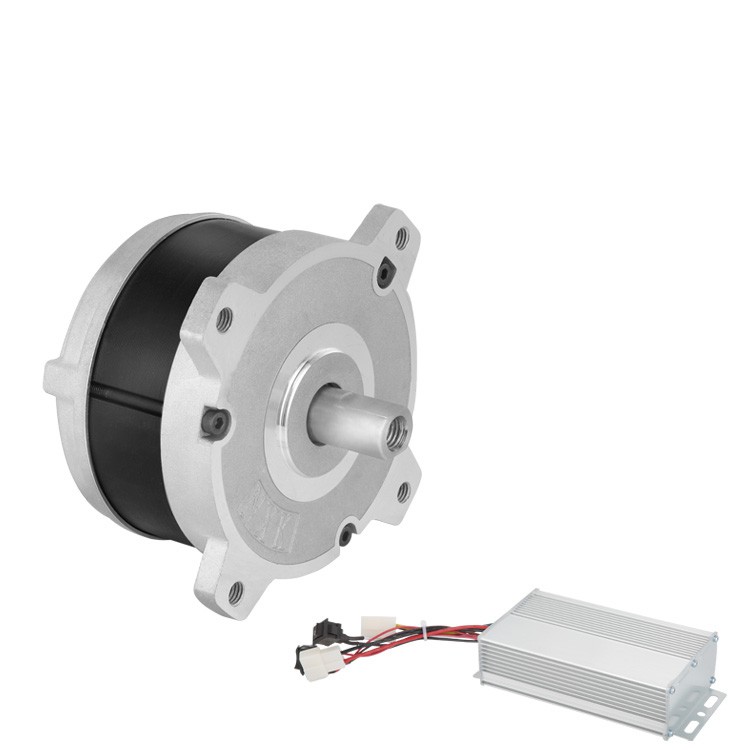
Finally, I want to stress the importance of following the manufacturer's instructions when it comes to operating and maintaining your High Speed BLDC Motor. This includes things like using the correct voltage, keeping the motor clean and lubricated, and performing regular inspections. By taking good care of your motor, you can ensure that it operates safely and efficiently for many years to come.
If you're in the market for a High Speed BLDC Motor and have any questions about rated voltage or any other aspect of our products, don't hesitate to reach out. We're here to help you find the perfect motor for your application and to provide you with the support you need to keep it running smoothly. Whether you're a small business owner looking for a motor for your sewing machine or an industrial manufacturer in need of a high-power motor, we have the expertise and the products to meet your needs. Contact us today to start the conversation about your motor requirements.
References
- "Electric Motors and Drives: Fundamentals, Types, and Applications" by Austin Hughes and Bill Drury
- "Brushless Permanent-Magnet and Reluctance Motor Drives" by T. J. E. Miller


