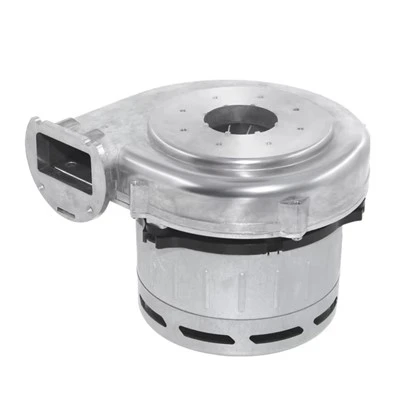
Altitude can have a significant impact on the performance of various types of equipment, and Through Flow BLDC Blowers are no exception. As a supplier of Through Flow BLDC Blowers, I've witnessed firsthand how changes in altitude can affect the operation and efficiency of these devices. In this blog post, I'll delve into the science behind these effects and discuss how they can influence the performance of our Through Flow BLDC Blower.
Understanding the Basics of Through Flow BLDC Blowers
Before we explore the impact of altitude, let's briefly understand what a Through Flow BLDC Blower is. These blowers are designed to move air or gas through a system using a brushless DC (BLDC) motor. The through-flow design allows for a more efficient and direct flow of air, making them ideal for a wide range of applications, including ventilation, cooling, and industrial processes.
The BLDC motor offers several advantages over traditional brushed motors, such as higher efficiency, longer lifespan, and better speed control. These features make Through Flow BLDC Blowers a popular choice for many industries, where reliability and performance are crucial.
The Role of Altitude in Blower Performance
Altitude affects blower performance primarily through its influence on air density. As altitude increases, the air density decreases. This is because the atmospheric pressure decreases with increasing altitude, causing the air molecules to spread out more. The relationship between altitude and air density can be described by the barometric formula, which shows that air density decreases exponentially with altitude.
The decrease in air density at higher altitudes has several implications for the performance of Through Flow BLDC Blowers:
1. Reduced Airflow
The airflow rate of a blower is directly related to the air density. When the air density decreases, the blower has to work harder to move the same volume of air. This is because there are fewer air molecules available to be moved by the blower's impeller. As a result, the airflow rate of the blower decreases at higher altitudes.
For example, a blower that is rated to deliver a certain airflow rate at sea level may deliver a significantly lower airflow rate at high altitudes. This can be a problem in applications where a specific airflow rate is required, such as in ventilation systems or cooling applications.
2. Decreased Pressure Rise
The pressure rise generated by a blower is also affected by air density. The pressure rise is the difference in pressure between the inlet and outlet of the blower. When the air density decreases, the blower is less able to generate a high pressure rise. This is because there are fewer air molecules available to be compressed by the blower's impeller.
A lower pressure rise can limit the blower's ability to overcome system resistance, such as ductwork or filters. In some cases, the blower may not be able to deliver the required pressure to move the air through the system effectively.
3. Increased Power Consumption
To maintain the same airflow rate and pressure rise at higher altitudes, the blower has to work harder. This means that the motor has to draw more power to drive the impeller. As a result, the power consumption of the blower increases at higher altitudes.
The increased power consumption can have several implications. It can lead to higher operating costs, as more electricity is required to run the blower. It can also put more stress on the motor, potentially reducing its lifespan.
Impact on Blower Efficiency
The decrease in airflow and pressure rise at higher altitudes can also affect the efficiency of the blower. Efficiency is defined as the ratio of the useful power output (airflow and pressure rise) to the power input (electrical power consumed by the motor). When the airflow and pressure rise decrease, the useful power output decreases, while the power input may increase. This can result in a lower efficiency for the blower.
A lower efficiency means that the blower is less effective at converting electrical energy into useful air movement. This can lead to wasted energy and higher operating costs. In addition, the increased power consumption can generate more heat, which can further reduce the efficiency of the motor and potentially damage the blower.
Mitigating the Effects of Altitude
There are several ways to mitigate the effects of altitude on the performance of Through Flow BLDC Blowers:
1. Oversizing the Blower
One way to compensate for the reduced airflow and pressure rise at higher altitudes is to oversize the blower. This means selecting a blower that is rated for a higher airflow rate and pressure rise than what is actually required at sea level. By oversizing the blower, it can still deliver the required airflow and pressure rise at higher altitudes.
However, oversizing the blower has its drawbacks. It can increase the initial cost of the blower and the installation. It can also lead to higher power consumption and operating costs, even at lower altitudes.
2. Adjusting the Motor Speed
Another way to mitigate the effects of altitude is to adjust the motor speed of the blower. By increasing the motor speed, the blower can generate more airflow and pressure rise. This can help to compensate for the decrease in air density at higher altitudes.
Most Through Flow BLDC Blowers are equipped with variable speed controllers, which allow for easy adjustment of the motor speed. By adjusting the speed based on the altitude, the blower can maintain a more consistent performance across different altitudes.
3. Using a High-Altitude-Designed Blower
Some manufacturers offer blowers that are specifically designed for high-altitude applications. These blowers are designed to operate more efficiently at lower air densities. They may have larger impellers, more powerful motors, or other design features that help to compensate for the effects of altitude.
Using a high-altitude-designed blower can be a cost-effective solution for applications at high altitudes. It can provide better performance and efficiency compared to standard blowers, while also reducing the risk of premature failure.
Real-World Applications
The impact of altitude on Through Flow BLDC Blowers can be seen in various real-world applications. For example, in mountainous regions, ventilation systems in buildings may require blowers that are designed to operate at high altitudes. If standard blowers are used, they may not be able to provide the required airflow and pressure rise, leading to poor ventilation and indoor air quality.
In industrial applications, such as mining or oil and gas extraction, blowers are often used in high-altitude locations. These blowers need to be able to operate reliably and efficiently in harsh environments, where the effects of altitude can be significant. Using high-altitude-designed blowers can help to ensure the safety and productivity of these operations.
Conclusion
Altitude has a significant impact on the performance of Through Flow BLDC Blowers. The decrease in air density at higher altitudes can lead to reduced airflow, decreased pressure rise, and increased power consumption. These effects can have a negative impact on the efficiency and reliability of the blower, as well as the overall performance of the system in which it is used.
As a supplier of Through Flow BLDC Blowers, we understand the importance of providing solutions that can operate effectively at different altitudes. We offer a range of blowers, including 230V Wet Dry BLDC Blower and High Prssure Small Centrifugal Blower, that are designed to meet the specific needs of our customers, regardless of the altitude.


If you are looking for a reliable and efficient Through Flow BLDC Blower for your application, especially in high-altitude locations, we encourage you to contact us for a consultation. Our team of experts can help you select the right blower for your needs and provide you with the technical support you need to ensure its optimal performance.
References
- Fundamentals of Engineering Thermodynamics, Moran and Shapiro
- Fluid Mechanics, Frank M. White
- Handbook of Air Conditioning and Refrigeration, William C. Turner