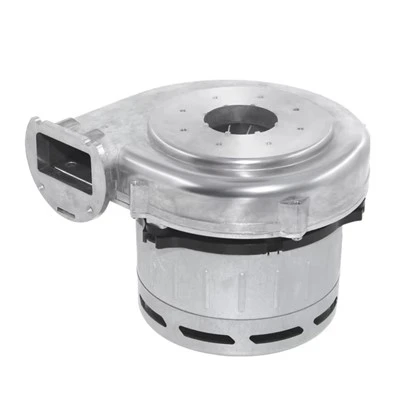
Electromagnetic interference (EMI) is a critical aspect to consider when dealing with BLDC (Brushless Direct Current) blowers. As a BLDC blower supplier, I've witnessed firsthand the importance of understanding EMI and its implications for these devices. In this blog, we'll delve into what electromagnetic interference of a BLDC blower is, its causes, effects, and how to mitigate it.
What is Electromagnetic Interference?
Electromagnetic interference refers to the disruption that occurs when an electromagnetic field generated by one electrical device affects another nearby device. This interference can manifest in various forms, such as radio frequency interference (RFI), which can disrupt radio signals, or electrical noise, which can affect the performance of sensitive electronic components.
In the context of a BLDC blower, EMI can be generated by the electrical currents flowing through the motor windings, the switching of the electronic commutation circuit, and the high - frequency signals associated with the control electronics. These electrical activities create electromagnetic fields that can radiate outward and potentially interfere with other electronic devices in the vicinity.
Causes of EMI in BLDC Blowers
- Switching of the Electronic Commutation Circuit
- BLDC motors use electronic commutation to control the flow of current through the motor windings. This involves the rapid switching of power transistors, typically MOSFETs or IGBTs. When these transistors switch on and off, they create sudden changes in current and voltage, which generate high - frequency electromagnetic fields. The faster the switching speed, the higher the frequency of the generated electromagnetic fields, and the greater the potential for EMI.
- High - Frequency Signals in Control Electronics
- The control electronics of a BLDC blower, such as the microcontroller and the driver circuit, generate high - frequency signals for functions like speed control, sensor feedback, and communication. These signals can also radiate electromagnetic energy and contribute to EMI. For example, a PWM (Pulse Width Modulation) signal used for speed control can have harmonics that extend into the radio frequency range, causing RFI.
- Motor Windings and Current Ripple
- The motor windings in a BLDC blower carry alternating currents that can create magnetic fields. In addition, there is often a current ripple in the motor windings, which is the small variation in current around the average value. This current ripple can generate additional electromagnetic fields that contribute to EMI.
Effects of EMI on BLDC Blowers and Other Devices
- Impact on the BLDC Blower Itself
- EMI can cause performance issues within the BLDC blower. For example, high - frequency interference can disrupt the control signals in the driver circuit, leading to inaccurate speed control or erratic operation. It can also cause increased electrical noise in the motor windings, which may result in additional heating and reduced efficiency.
- Interference with Other Electronic Devices
- EMI from a BLDC blower can interfere with other nearby electronic devices. In a home or office environment, it can disrupt radio and television reception, or cause interference with wireless communication devices such as Wi - Fi routers and Bluetooth devices. In an industrial setting, it can affect the operation of sensitive control systems, sensors, and data acquisition equipment.
Mitigation of EMI in BLDC Blowers
- Filtering
- One of the most common methods to mitigate EMI is the use of filters. Input filters can be placed at the power supply input of the BLDC blower to suppress high - frequency noise from entering the device. Output filters can be used to reduce the electromagnetic emissions from the motor windings. These filters typically consist of inductors, capacitors, and resistors arranged in specific configurations to block or attenuate high - frequency signals.
- Shielding
- Shielding involves enclosing the BLDC blower or its sensitive components in a conductive enclosure. The conductive material, such as metal, acts as a barrier to electromagnetic fields, preventing them from radiating outward. The enclosure can be grounded to provide a path for the induced currents to flow safely to the ground.
- Proper Circuit Layout
- The layout of the printed circuit board (PCB) in the BLDC blower's control electronics is crucial for reducing EMI. Components should be arranged in a way that minimizes the length of high - frequency signal traces and reduces the coupling between different circuits. Ground planes can be used to provide a low - impedance return path for electrical currents and to reduce electromagnetic coupling.
Our BLDC Blower Products and EMI Considerations
As a BLDC blower supplier, we are committed to providing high - quality products with minimal EMI. Our 800W High Pressure BLDC Blower is designed with advanced filtering and shielding techniques to ensure reliable operation and low electromagnetic emissions. This blower is suitable for applications where high pressure and high airflow are required, such as industrial ventilation systems.


Our High Temperature Air Blower is another product that takes EMI into account. It is designed to operate in high - temperature environments, and our engineers have implemented special measures to prevent EMI from affecting its performance in such harsh conditions.
For applications that require a lower voltage, our 24V High Pressure BLDC Blower is an excellent choice. We have optimized the circuit design and used high - quality components to reduce EMI and ensure stable operation.
Conclusion
Understanding electromagnetic interference in BLDC blowers is essential for both the proper operation of the blowers themselves and the avoidance of interference with other electronic devices. As a BLDC blower supplier, we are constantly working on improving our products to minimize EMI. By using advanced filtering, shielding, and circuit layout techniques, we can provide BLDC blowers that meet the highest standards of performance and reliability.
If you are in the market for high - quality BLDC blowers and have concerns about EMI, we invite you to contact us for more information. Our team of experts can help you select the right blower for your specific application and address any questions you may have regarding EMI mitigation. We look forward to discussing your requirements and working with you on your next project.
References
- “Electromagnetic Compatibility Engineering” by Henry W. Ott.
- “Switch - Mode Power Supplies: SPICE Simulations and Practical Designs” by Marty Brown.
- Manufacturer's datasheets and application notes for BLDC blower components.