Hey there! As a BLDC motor supplier, I've been getting a lot of questions about electromagnetic interference (EMI) of BLDC motors. So, I thought I'd write this blog to break it down for you.
First off, let's talk about what BLDC motors are. BLDC stands for Brushless Direct Current motor. These motors are super popular these days, especially in power tools and other high - performance applications. You can check out our BLDC Motor for Power Tools and 3 Phase BLDC Brushless DC Motor on our website. They're top - notch products that we're really proud of.
Now, let's dive into EMI. Electromagnetic interference is basically the disturbance that affects an electrical circuit because of either electromagnetic induction or electromagnetic radiation emitted from an external source. In the case of BLDC motors, EMI can be a real pain in the neck.
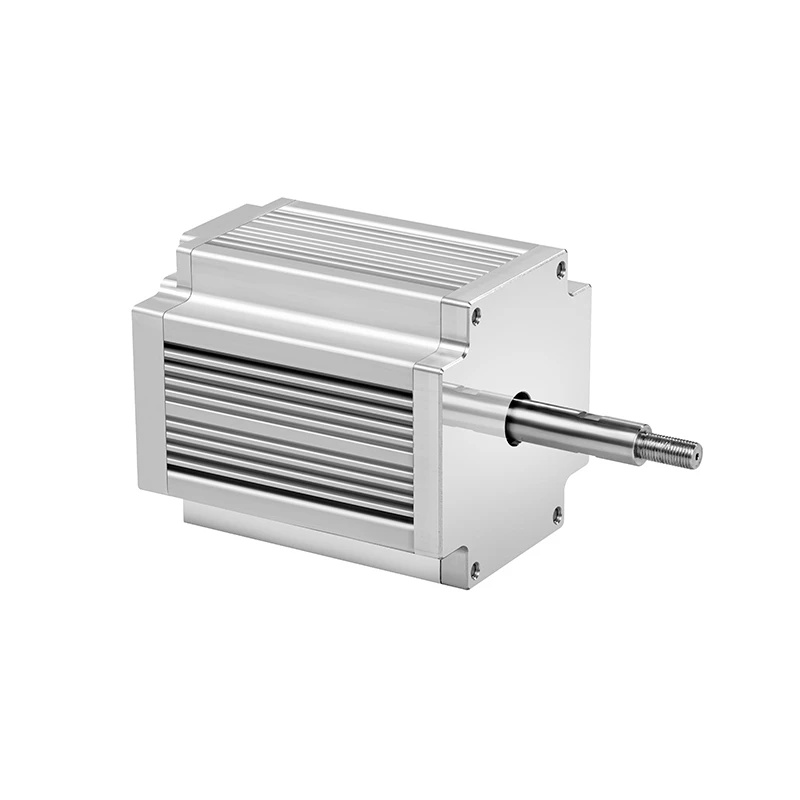

BLDC motors work by using electronic commutation instead of brushes like traditional DC motors. This electronic commutation involves the rapid switching of current in the motor windings. When these switches happen, they create sudden changes in current and voltage. And guess what? These sudden changes generate electromagnetic fields. These fields can then interfere with other electronic devices in the vicinity.
There are two main types of EMI: conducted and radiated. Conducted EMI travels along power lines and signal cables. It can get into other devices through the power supply or communication lines. Radiated EMI, on the other hand, is emitted into the air as electromagnetic waves. It can affect nearby electronic equipment that's not even physically connected to the BLDC motor.
So, why is EMI such a big deal? Well, for starters, it can cause malfunctions in other electronic devices. If you're using a BLDC motor in a piece of medical equipment, for example, EMI could interfere with the operation of other sensitive electronic components in the same room. This could lead to inaccurate readings or even complete failure of the equipment.
In industrial settings, EMI can disrupt communication systems. It can cause data errors in control systems, which can be really dangerous in applications where precision is key, like in automated manufacturing processes. Also, in consumer electronics, EMI can cause annoying problems like static on radio or TV signals.
Now, as a BLDC motor supplier, we know how important it is to deal with EMI. That's why we've put a lot of effort into reducing the EMI generated by our motors. One of the ways we do this is by using high - quality components. For instance, we use low - resistance capacitors and inductors in our motor controllers. These components help to smooth out the sudden changes in current and voltage, which in turn reduces the generation of electromagnetic fields.
Another thing we do is implement proper grounding techniques. A good ground connection helps to divert the unwanted electromagnetic energy away from the motor and into the ground. This can significantly reduce both conducted and radiated EMI.
We also use shielding in our motors. Shielding is basically a layer of conductive material that surrounds the motor or its components. This layer acts as a barrier, preventing the electromagnetic fields from escaping and interfering with other devices. Our 220V 1500rpm 250W BLDC Motor is designed with advanced shielding technology to minimize EMI.
In addition to these hardware solutions, we also pay close attention to the software in our motor controllers. By optimizing the control algorithms, we can reduce the frequency and intensity of the current switching in the motor windings. This helps to lower the overall EMI generated by the motor.
But it's not just us. There are industry standards and regulations regarding EMI. For example, the Federal Communications Commission (FCC) in the United States has set limits on the amount of EMI that electronic devices can emit. In Europe, the CE marking indicates that a product complies with the relevant European Union directives, including those related to EMI. As a responsible BLDC motor supplier, we make sure that all our motors meet these standards.
So, if you're in the market for a BLDC motor, it's really important to consider the EMI factor. You don't want to end up with a motor that causes all sorts of problems for other electronic devices. And that's where we come in. We're committed to providing you with high - quality BLDC motors that not only perform well but also have low EMI levels.
If you're interested in our BLDC motors or have any questions about EMI or our products in general, don't hesitate to reach out. We're here to help you find the perfect motor for your application. Whether you need a motor for a power tool, an industrial machine, or a consumer electronic device, we've got you covered.
In conclusion, EMI is a significant issue when it comes to BLDC motors. But with the right design, high - quality components, and proper techniques, it can be effectively managed. As a BLDC motor supplier, we're constantly working to improve our products and reduce the EMI they generate. So, if you're looking for a reliable and low - EMI BLDC motor, give us a chance to serve you.
References
- "Electromagnetic Compatibility Engineering" by Henry W. Ott
- "Brushless Permanent - Magnet Motor Design" by Ned Mohan