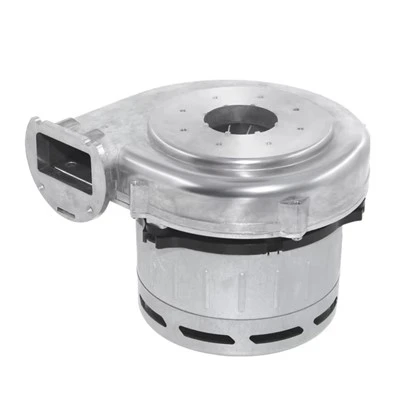
Air quality is a critical aspect of both indoor and outdoor environments, significantly impacting human health and overall well - being. As a BLDC blower supplier, I've witnessed firsthand how these advanced devices can bring about remarkable improvements in air quality. In this blog, we'll explore the air quality improvement effects of a BLDC blower and understand why it's becoming an increasingly popular choice in various applications.
Understanding BLDC Blowers
Before delving into the air quality improvement effects, it's essential to understand what a BLDC blower is. A Brushless Direct Current (BLDC) blower is an electric blower that uses a permanent magnet synchronous motor. Unlike traditional brushed motors, BLDC motors have no brushes, which reduces friction, heat generation, and wear and tear. This results in a more efficient, reliable, and long - lasting device.
The operation of a BLDC blower is based on the principle of electromagnetic induction. When an electric current is applied to the stator windings, a rotating magnetic field is created. This magnetic field interacts with the permanent magnets on the rotor, causing it to rotate. The rotation of the rotor drives the impeller, which then draws in air and expels it at a high velocity.
Air Quality Improvement Mechanisms of BLDC Blowers
Ventilation and Air Circulation
One of the primary ways BLDC blowers improve air quality is through ventilation and air circulation. In indoor spaces such as offices, homes, and industrial facilities, stale air can accumulate over time. This stale air may contain pollutants such as carbon dioxide, volatile organic compounds (VOCs), and particulate matter.
BLDC blowers can be installed in ventilation systems to continuously exchange indoor air with fresh outdoor air. By drawing in fresh air and expelling stale air, they help dilute the concentration of pollutants in the indoor environment. For example, in an office building, a well - designed ventilation system with BLDC blowers can ensure that employees are breathing clean, fresh air throughout the day, reducing the risk of headaches, fatigue, and other health problems associated with poor air quality.
In addition to ventilation, BLDC blowers also enhance air circulation within a space. They can be used to distribute conditioned air evenly, preventing the formation of stagnant air pockets. This is particularly important in large rooms or areas with complex layouts, where proper air circulation can be challenging to achieve.
Filtration Support
Many air purification systems rely on filters to remove pollutants from the air. BLDC blowers play a crucial role in these systems by providing the necessary airflow to drive the air through the filters. The high - speed airflow generated by the blower ensures that a large volume of air passes through the filter, increasing the efficiency of the filtration process.


For instance, in a HEPA (High - Efficiency Particulate Air) filtration system, a BLDC blower can draw in contaminated air and force it through the HEPA filter. The filter can then capture up to 99.97% of particles as small as 0.3 microns, including dust, pollen, mold spores, and some bacteria. Without a powerful blower like a BLDC blower, the air would move too slowly through the filter, reducing its effectiveness.
Removal of Specific Pollutants
Welding Fumes
In industrial settings, welding operations generate a significant amount of fumes and particulate matter. These fumes contain harmful substances such as metal oxides, ozone, and nitrogen oxides, which can cause respiratory problems, eye irritation, and other health issues for workers.
BLDC Blower for Welding Fume Extraction is specifically designed to address this problem. These blowers can be integrated into fume extraction systems to capture and remove welding fumes at the source. The high - suction power of the BLDC blower ensures that the fumes are quickly drawn into the extraction system, preventing them from spreading throughout the workplace.
Volatile Organic Compounds (VOCs)
VOCs are emitted by a wide range of sources, including paints, solvents, cleaning products, and building materials. Prolonged exposure to VOCs can cause headaches, dizziness, and in some cases, more serious health problems such as liver and kidney damage.
BLDC blowers can be used in air purification systems equipped with activated carbon filters to remove VOCs from the air. The blower creates an airflow that carries the VOC - laden air through the activated carbon filter, where the VOC molecules are adsorbed onto the surface of the carbon. This effectively reduces the concentration of VOCs in the indoor environment.
Applications of BLDC Blowers for Air Quality Improvement
Residential Applications
In homes, BLDC blowers are commonly used in HVAC (Heating, Ventilation, and Air Conditioning) systems. They can improve air quality by ensuring proper ventilation and air circulation, as well as by supporting the operation of air filters. For example, in a central air conditioning system, a BLDC blower can distribute cooled or heated air evenly throughout the house, while also helping to remove dust and other pollutants from the air.
BLDC blowers can also be used in standalone air purifiers. These portable devices can be placed in specific rooms, such as bedrooms or living rooms, to target areas with poor air quality. The high - efficiency operation of BLDC blowers makes these air purifiers more effective in removing pollutants and improving the overall air quality in the room.
Commercial and Industrial Applications
In commercial buildings such as offices, shopping malls, and hotels, BLDC blowers are essential for maintaining good air quality. They are used in large - scale ventilation and air conditioning systems to provide a comfortable and healthy environment for occupants.
In industrial settings, the applications of BLDC blowers are even more diverse. High Pressure Centrifugal Blower can be used in manufacturing processes where high - pressure airflow is required, such as in drying operations or pneumatic conveying systems. These blowers can also be used in industrial exhaust systems to remove pollutants and fumes generated during production.
Peripheral By Pass BLDC Blower is another type of BLDC blower commonly used in industrial applications. It is designed to provide a high - volume, low - pressure airflow, making it suitable for applications such as ventilation in large warehouses or factories.
Advantages of Using BLDC Blowers for Air Quality Improvement
Energy Efficiency
One of the most significant advantages of BLDC blowers is their energy efficiency. Compared to traditional AC blowers, BLDC blowers consume less power while providing the same or even higher airflow. This is because BLDC motors have a higher power - to - weight ratio and a more efficient design. The reduced energy consumption not only saves on electricity costs but also makes BLDC blowers a more environmentally friendly option.
Low Noise Operation
BLDC blowers operate quietly, which is an important consideration in both residential and commercial applications. The absence of brushes in the motor reduces mechanical noise, and the advanced design of the impeller and housing further minimizes airflow noise. This means that BLDC blowers can improve air quality without causing a nuisance to occupants.
Long Service Life
The durability of BLDC blowers is another advantage. The lack of brushes in the motor eliminates the problem of brush wear, which is a common cause of failure in traditional motors. Additionally, the high - quality materials and precise manufacturing processes used in BLDC blowers ensure that they can withstand the rigors of continuous operation. This results in a longer service life, reducing the need for frequent replacements and maintenance.
Conclusion
The air quality improvement effects of BLDC blowers are undeniable. Through ventilation, air circulation, filtration support, and the removal of specific pollutants, these advanced devices can significantly enhance the air quality in various environments, from homes to industrial facilities. Their energy efficiency, low noise operation, and long service life make them an attractive choice for both consumers and businesses.
If you're interested in improving the air quality of your space and are considering a BLDC blower solution, we're here to help. As a leading BLDC blower supplier, we offer a wide range of products to meet your specific needs. Whether you need a blower for a small residential air purifier or a large - scale industrial ventilation system, we can provide you with the right product and professional advice. Contact us today to start a discussion about your air quality improvement requirements and explore the best BLDC blower solutions for you.
References
- "Air Quality and Ventilation in Buildings", World Health Organization.
- "Brushless DC Motors: Theory, Design, and Applications", Ned Mohan.
- "Industrial Ventilation: A Manual of Recommended Practice", American Conference of Governmental Industrial Hygienists.