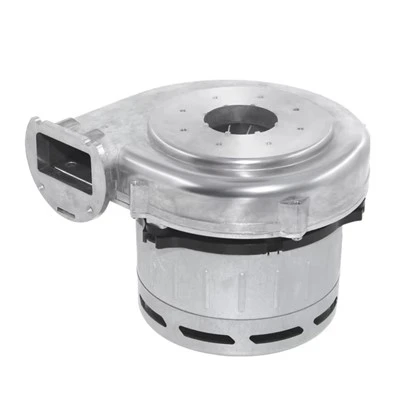
Hey there! As a supplier of BLDC blowers, I often get asked about the acoustic performance of these nifty little devices. So, I thought I'd take a deep dive into what makes the acoustic performance of a BLDC blower tick.
First off, let's quickly understand what a BLDC blower is. BLDC stands for Brushless Direct Current. Unlike traditional blowers with brushes, BLDC blowers use electronic commutation, which brings a bunch of advantages, including better efficiency, longer lifespan, and yes, better acoustic performance.
What Affects the Acoustic Performance of a BLDC Blower?
1. Motor Design
The motor is the heart of the blower, and its design plays a crucial role in acoustic performance. In a BLDC motor, the way the coils are wound and the number of poles can impact the noise level. For example, a motor with a higher number of poles might operate more smoothly, reducing the vibrations that can lead to noise. Also, the quality of the magnetic materials used in the motor can make a difference. High - quality magnets can lead to more stable magnetic fields, resulting in quieter operation.
2. Blade Design
The blades of the blower are responsible for moving air. Their shape, size, and number can all affect the noise produced. Aerodynamically designed blades can move air more efficiently, reducing the turbulence that creates noise. For instance, blades with a curved or airfoil shape are often better at minimizing noise compared to straight blades. The number of blades also matters. A blower with too few blades might create a pulsating noise, while too many blades can increase the load on the motor and potentially generate more noise.
3. Airflow Path
The path that the air takes through the blower can impact its acoustic performance. A smooth and unobstructed airflow path reduces the chances of air getting turbulent and creating noise. Blowers with well - designed inlet and outlet ducts can guide the air more effectively, resulting in quieter operation. Any sharp bends or obstructions in the airflow path can cause the air to swirl and create noise.
4. Mounting and Enclosure
How the blower is mounted and the type of enclosure it has can also affect noise. A blower that is mounted securely with proper vibration - damping materials can reduce the transmission of vibrations to the surrounding structure, which in turn reduces noise. The enclosure can act as a sound barrier. A well - designed enclosure can absorb and dampen the noise produced by the blower, making it quieter for the end - user.
Measuring the Acoustic Performance of a BLDC Blower
There are a few key metrics used to measure the acoustic performance of a BLDC blower.
1. Sound Pressure Level (SPL)
This is the most common metric. It measures the sound intensity in decibels (dB). A lower SPL means a quieter blower. The SPL is usually measured at a specific distance from the blower, typically 1 meter. For example, a high - quality BLDC blower might have an SPL of around 40 - 50 dB at 1 meter, which is relatively quiet, similar to the sound of a quiet library.
2. Frequency Spectrum
The frequency spectrum shows the distribution of sound energy across different frequencies. A blower that produces most of its noise at high frequencies can be more annoying to the human ear compared to one that has a more evenly distributed frequency spectrum. By analyzing the frequency spectrum, engineers can identify the sources of noise and make design improvements.
Why Good Acoustic Performance Matters
In many applications, the acoustic performance of a BLDC blower is crucial.
1. Home Appliances
In home appliances like air purifiers, vacuum cleaners, and refrigerators, a quiet blower is essential. No one wants a noisy air purifier disturbing their sleep or a vacuum cleaner that sounds like a jet engine. Good acoustic performance enhances the user experience and makes these appliances more appealing to consumers.
2. Medical Equipment
In medical equipment such as ventilators and oxygen concentrators, quiet operation is a must. Patients need a peaceful environment for recovery, and a noisy blower can be a major distraction. Also, in some medical settings, accurate measurements can be affected by excessive noise, so a quiet blower is necessary for reliable operation.
3. Industrial Applications
Even in industrial settings, where noise is often more tolerated, a quiet blower can be beneficial. It can reduce the overall noise pollution in the workplace, improving the working conditions for employees. Additionally, in some industrial processes where sensitive equipment is used, a noisy blower can cause interference, so a quiet one is preferred.
Our BLDC Blowers and Their Acoustic Performance
At our company, we take acoustic performance seriously. We've spent a lot of time and effort in researching and developing our BLDC blowers to ensure they offer excellent acoustic performance.
Our 24V High Pressure BLDC Blower is designed with aerodynamically optimized blades and a well - designed airflow path. This results in a very low SPL, making it suitable for applications where quiet operation is required.
The BLDC Suction Blower also features a high - quality motor and a robust enclosure that helps to dampen noise. It's a great choice for applications like air sampling and small - scale ventilation where noise can be a concern.
And our 36V High Pressure BLDC Blower combines high pressure performance with low noise. We've used advanced magnetic materials in the motor and carefully designed the blade geometry to minimize noise while delivering powerful airflow.
Conclusion
The acoustic performance of a BLDC blower is influenced by many factors, including motor design, blade design, airflow path, and mounting. Measuring it through metrics like SPL and frequency spectrum helps us understand how quiet a blower is. Good acoustic performance is crucial in various applications, from home appliances to medical and industrial equipment.


If you're in the market for a high - quality BLDC blower with excellent acoustic performance, we'd love to hear from you. Whether you need a blower for a small home project or a large - scale industrial application, we have the right solution for you. Contact us to discuss your requirements and let's start a great partnership!
References
- Engineering Handbook of Blower Design
- Research Papers on BLDC Motor Acoustics
- Industry Standards for Blower Acoustic Performance