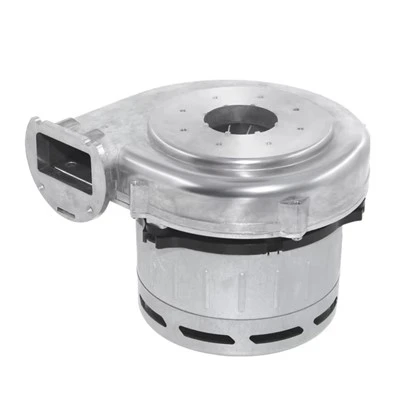
Hey there! As an OEM Comb fan supplier, I've seen firsthand how different design factors can really impact the performance of these fans. In this blog, I'll break down some of the key design elements that play a crucial role in how well an OEM Comb fan works.
1. Blade Design
The blades of a Comb fan are like the heart of the whole operation. Their shape, number, and angle can make a huge difference in performance.
Shape
The shape of the blades determines how air is moved through the fan. Curved blades, for example, are great at creating a smooth flow of air. They can reduce turbulence and noise, which is super important in many applications. On the other hand, straight blades might be simpler to manufacture, but they often don't perform as well in terms of efficiency.
Number
The number of blades also matters. More blades generally mean more air can be moved at once, but it can also increase the load on the motor. Fewer blades might be more energy - efficient, but they may not move as much air. It's all about finding the right balance. For instance, in some high - performance Comb fans, we might use a larger number of blades to achieve a high volume of air movement.
Angle
The blade angle affects the direction and force of the air being pushed. A steeper angle can generate more pressure, which is useful when the fan needs to push air through a long duct or against resistance. A shallower angle, on the other hand, is better for creating a wide, gentle flow of air.
2. Motor Design
The motor is what powers the fan, so its design is critical.
Power
The power of the motor determines how fast the fan can spin and how much air it can move. A more powerful motor can drive the fan at higher speeds, but it also consumes more energy. We need to choose a motor with the right power rating for the specific application of the Comb fan. For example, in industrial settings where large volumes of air need to be moved quickly, a high - power motor is essential.
Efficiency
An efficient motor can save a lot of energy over time. Newer motor technologies, like brushless DC motors, are much more efficient than traditional motors. They also tend to have a longer lifespan and require less maintenance. At our company, we often use these advanced motors in our OEM Comb fans to provide better performance and value to our customers.
Speed Control
Some applications require the fan to operate at different speeds. A motor with good speed control capabilities allows the fan to adjust its performance based on the needs of the system. This can be achieved through various methods, such as variable frequency drives or pulse - width modulation.
3. Housing Design
The housing of the Comb fan is not just a protective shell; it also has a big impact on performance.
Shape
The shape of the housing can affect the airflow pattern. A well - designed housing can guide the air smoothly through the fan, reducing turbulence and improving efficiency. For example, a streamlined housing can minimize air resistance and allow the fan to operate more quietly.
Size
The size of the housing needs to be appropriate for the fan and the application. If the housing is too small, it can restrict the airflow and cause the fan to work harder. If it's too large, it can lead to inefficient use of space and may not provide enough support for the fan.


Material
The material of the housing can also influence performance. Durable and lightweight materials, such as plastic or aluminum, are commonly used. Plastic is often a good choice because it's inexpensive, corrosion - resistant, and easy to mold into different shapes. Aluminum, on the other hand, is more heat - conductive and can help dissipate heat from the motor, which can improve the overall reliability of the fan.
4. Inlet and Outlet Design
The design of the inlet and outlet of the Comb fan is crucial for proper airflow.
Inlet
A well - designed inlet can ensure that the air enters the fan smoothly and evenly. It should be free from obstructions and have a shape that promotes laminar flow. For example, a bell - shaped inlet can reduce air resistance and improve the efficiency of the fan.
Outlet
The outlet design determines how the air is discharged from the fan. It can affect the direction, spread, and velocity of the airflow. A properly designed outlet can direct the air exactly where it's needed, which is important in many applications. For instance, in a heating or cooling system, the outlet needs to be designed to distribute the air evenly throughout the space.
5. Sealing Design
Good sealing is essential to prevent air leakage. Air leakage can reduce the efficiency of the fan and cause uneven airflow.
Gaskets and Seals
We use high - quality gaskets and seals in our OEM Comb fans to ensure a tight seal between different components. These gaskets are made from materials that can withstand the operating conditions of the fan, such as high temperatures or chemicals.
Assembly Quality
Proper assembly is also important for achieving a good seal. Our manufacturing process includes strict quality control measures to ensure that all components are assembled correctly and that the seals are intact.
How Our OEM Comb Fans Stand Out
At our company, we take all these design factors into account when developing our OEM Comb fans. We use the latest technologies and materials to ensure that our fans offer the best performance, reliability, and energy efficiency.
We offer a wide range of Comb fans, including Full Premixed Gas Blower, Gas Blower for Burner, and Combustion EC Gas Blower. Each of these fans is designed to meet the specific needs of different applications.
If you're in the market for high - quality OEM Comb fans, we'd love to hear from you. Whether you need a custom - designed fan for a unique application or a standard fan for a common use, we have the expertise and resources to provide you with the right solution. Contact us today to start a discussion about your requirements and see how our fans can improve your system's performance.
References
- ASHRAE Handbook of Fundamentals.
- Fan Engineering: The Application, Analysis, and Design of Fans.