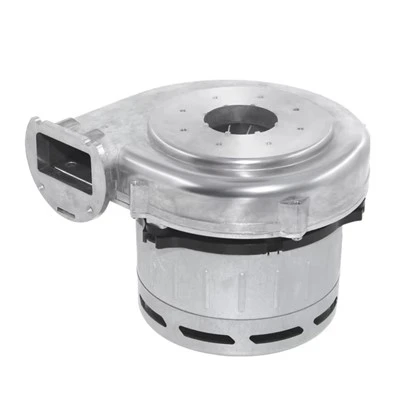
Achieving high-precision speed regulation for a high-speed BLDC (Brushless DC) motor is crucial in many applications, from industrial machinery to consumer electronics. As a high-speed BLDC motor supplier, I've seen firsthand how important it is to get this right. In this blog post, I'll share some tips and strategies on how to achieve that high-precision speed regulation you're looking for.
Understanding the Basics of High-Speed BLDC Motors
Before we dive into the speed regulation techniques, let's quickly go over what high-speed BLDC motors are. These motors are known for their efficiency, high power density, and long lifespan. They work by using electronic commutation instead of brushes, which reduces friction and wear. This makes them ideal for high-speed applications where precision and reliability are key.
One of our popular products is the 220V 1500rpm 250W BLDC Motor. It's a great example of a high-speed BLDC motor that offers a good balance of power and speed. Another option is the 3 Phase BLDC Brushless DC Motor, which is commonly used in more complex industrial applications.
Factors Affecting Speed Regulation
There are several factors that can affect the speed regulation of a high-speed BLDC motor. Understanding these factors is the first step in achieving high-precision speed control.


Load Variation
The load on the motor can have a significant impact on its speed. When the load increases, the motor tends to slow down, and vice versa. To compensate for load variations, you need a control system that can adjust the motor's input power accordingly.
Voltage Fluctuations
Voltage fluctuations in the power supply can also cause speed variations in the motor. A stable power supply is essential for precise speed regulation. You might need to use a voltage regulator or a power conditioning unit to ensure a constant voltage supply to the motor.
Temperature
Temperature can affect the performance of the motor and its components. As the temperature rises, the resistance of the motor windings increases, which can lead to a decrease in speed. You need to monitor the motor's temperature and take appropriate measures to keep it within a safe operating range.
Techniques for High-Precision Speed Regulation
Closed-Loop Control Systems
One of the most effective ways to achieve high-precision speed regulation is by using a closed-loop control system. In a closed-loop system, the actual speed of the motor is measured and compared to the desired speed. If there is a difference between the two, the control system adjusts the motor's input power to bring the speed back to the desired level.
There are several types of closed-loop control systems, including proportional-integral-derivative (PID) controllers. PID controllers are widely used because they are relatively simple to implement and can provide good performance in a variety of applications.
Sensorless Control
Sensorless control is another technique that can be used to achieve high-precision speed regulation. In a sensorless control system, the motor's speed and position are estimated without the need for external sensors. This can reduce the cost and complexity of the system.
However, sensorless control can be more challenging to implement, especially at low speeds. You need to use advanced algorithms and signal processing techniques to accurately estimate the motor's speed and position.
Field-Oriented Control (FOC)
Field-oriented control, also known as vector control, is a more advanced technique for high-precision speed regulation. FOC allows you to control the motor's torque and speed independently by separating the motor's magnetic field into two components: the torque-producing component and the flux-producing component.
This technique provides better dynamic performance and higher efficiency compared to other control methods. However, it requires more complex control algorithms and hardware.
Choosing the Right Components
In addition to using the right control techniques, choosing the right components is also crucial for achieving high-precision speed regulation.
Power Electronics
The power electronics used to drive the motor play a significant role in speed regulation. You need to choose a power inverter that can provide a clean and stable power supply to the motor. Look for inverters with high switching frequencies and low harmonic distortion.
Sensors
If you're using a closed-loop control system, you'll need to choose the right sensors to measure the motor's speed and position. Encoders and Hall effect sensors are commonly used for this purpose. Make sure the sensors are accurate and reliable.
Application-Specific Considerations
The requirements for speed regulation can vary depending on the application. For example, in a CE Certified High Pressure Fans application, you might need to achieve a very precise and stable speed to ensure proper airflow and pressure.
On the other hand, in some industrial applications, you might need to be able to adjust the speed quickly in response to changing load conditions. You need to consider these application-specific requirements when designing your speed regulation system.
Testing and Validation
Once you've designed your speed regulation system, it's important to test and validate it to ensure it meets your requirements. You can use test benches and simulation tools to evaluate the performance of the system under different conditions.
During testing, pay attention to factors such as speed accuracy, stability, and response time. Make any necessary adjustments to the system based on the test results.
Conclusion
Achieving high-precision speed regulation for a high-speed BLDC motor is a complex but achievable goal. By understanding the factors that affect speed regulation, using the right control techniques, choosing the appropriate components, considering application-specific requirements, and thoroughly testing and validating your system, you can achieve the level of precision you need.
If you're in the market for high-speed BLDC motors or need help with speed regulation, feel free to reach out. We have a wide range of products and expertise to support your needs. Contact us for more information and to start a discussion about your specific requirements.
References
- Johnson, M. (2018). Brushless DC Motor Handbook. New York: Wiley.
- Smith, A. (2020). Fundamentals of Electric Drives. London: Elsevier.
- Brown, C. (2021). Advanced Control Techniques for Electric Motors. Berlin: Springer.