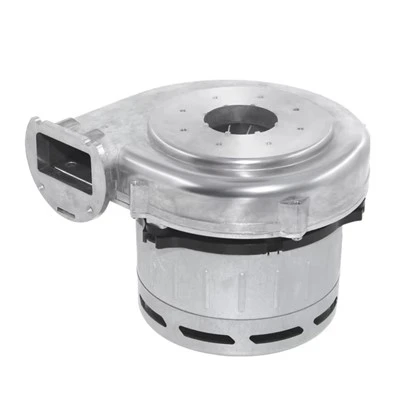
As a supplier of Through Flow BLDC Blowers, I've witnessed firsthand the significant impact that the motor type can have on the performance of these essential devices. In this blog, I'll delve into the various motor types used in Through Flow BLDC Blowers and explore how they influence performance, efficiency, and overall suitability for different applications.
Understanding Through Flow BLDC Blowers
Through Flow BLDC Blowers are widely used in a variety of industries, including HVAC systems, industrial ventilation, and electronic cooling. These blowers are known for their high efficiency, reliable performance, and low noise levels. The key to their success lies in the use of brushless DC (BLDC) motors, which offer several advantages over traditional brushed motors.
Types of BLDC Motors Used in Through Flow Blowers
There are several types of BLDC motors commonly used in Through Flow Blowers, each with its own unique characteristics and performance capabilities. Some of the most popular motor types include:
Outer Rotor BLDC Motors
Outer rotor BLDC motors are designed with the rotor on the outside of the stator, which allows for a larger diameter and greater torque output. This makes them ideal for applications that require high air flow rates and pressure, such as Two Stage High Pressure BLDC Blower. Outer rotor motors also tend to have a lower profile and can be more compact, making them suitable for applications where space is limited.
Inner Rotor BLDC Motors
Inner rotor BLDC motors have the rotor located inside the stator, which results in a smaller diameter and higher rotational speed. These motors are typically more efficient and have a higher power density than outer rotor motors, making them a good choice for applications that require high-speed operation and lower power consumption. High Temperature Air Blower often use inner rotor BLDC motors to withstand the demanding conditions of high-temperature environments.
Slotless BLDC Motors
Slotless BLDC motors are designed without the traditional slots in the stator, which reduces cogging torque and improves efficiency. These motors are known for their smooth operation, low noise levels, and high-speed capability. Slotless motors are commonly used in applications that require precise control and high-performance, such as aerospace and medical devices.
Slotted BLDC Motors
Slotted BLDC motors have slots in the stator, which provide a path for the magnetic flux and increase the motor's torque output. These motors are generally more robust and can handle higher loads than slotless motors, making them suitable for industrial applications that require high torque and reliability. Air Blower for Dust Extractor often use slotted BLDC motors to handle the heavy workload of dust extraction.
Impact of Motor Type on Blower Performance
The choice of motor type can have a significant impact on the performance of a Through Flow BLDC Blower. Here are some of the key performance factors that are influenced by the motor type:
Air Flow Rate
The motor type can affect the air flow rate of the blower by determining the speed and torque of the motor. Outer rotor motors, with their larger diameter and greater torque output, are capable of generating higher air flow rates than inner rotor motors. However, inner rotor motors can achieve higher rotational speeds, which can also contribute to increased air flow.
Pressure
The pressure generated by the blower is directly related to the motor's torque and the design of the impeller. Motors with higher torque outputs are able to generate more pressure, making them suitable for applications that require high-pressure air flow, such as Two Stage High Pressure BLDC Blower.
Efficiency
The efficiency of a Through Flow BLDC Blower is determined by the motor's design, the quality of the components, and the operating conditions. Inner rotor motors are generally more efficient than outer rotor motors, as they have a lower resistance and less friction. Slotless motors are also known for their high efficiency, as they reduce cogging torque and improve the motor's overall performance.
Noise Levels
The noise levels produced by the blower are influenced by the motor's design, the speed of the motor, and the quality of the components. Outer rotor motors tend to produce more noise than inner rotor motors, as they have a larger diameter and a higher torque output. However, modern motor designs and advanced control algorithms have significantly reduced the noise levels of both types of motors.
Reliability
The reliability of a Through Flow BLDC Blower is critical for ensuring long-term performance and reducing maintenance costs. Motors with a simple design, high-quality components, and robust construction are more likely to be reliable and require less maintenance. Slotted BLDC motors are generally more reliable than slotless motors, as they have a more robust design and can handle higher loads.
Choosing the Right Motor Type for Your Application
When choosing a Through Flow BLDC Blower, it's important to consider the specific requirements of your application. Here are some factors to consider when selecting the right motor type:
Air Flow and Pressure Requirements
Determine the required air flow rate and pressure for your application. If you need high air flow rates and pressure, an outer rotor motor may be the best choice. If you require high-speed operation and lower power consumption, an inner rotor motor may be more suitable.
Efficiency and Power Consumption
Consider the efficiency and power consumption of the motor. Inner rotor motors and slotless motors are generally more efficient than outer rotor motors, which can result in lower energy costs over the life of the blower.
Noise Levels
If noise is a concern, choose a motor with a low noise design. Inner rotor motors and slotless motors tend to produce less noise than outer rotor motors.
Reliability and Maintenance
Look for a motor with a reliable design and high-quality components. Slotted BLDC motors are generally more reliable and require less maintenance than slotless motors.


Conclusion
In conclusion, the motor type used in a Through Flow BLDC Blower has a significant impact on its performance, efficiency, and overall suitability for different applications. By understanding the characteristics of different motor types and considering the specific requirements of your application, you can choose the right motor to ensure optimal performance and reliability.
If you're in the market for a Through Flow BLDC Blower, I encourage you to contact us to discuss your specific needs. Our team of experts can help you select the right motor type and blower configuration to meet your requirements. We offer a wide range of high-quality Through Flow BLDC Blowers, including Two Stage High Pressure BLDC Blower, High Temperature Air Blower, and Air Blower for Dust Extractor. Contact us today to start the procurement process and experience the difference our products can make in your applications.
References
- Ericson, R., & Nilsson, U. (2015). Permanent Magnet Brushless DC Drives. CRC Press.
- Kraus, H. L., & Carver, J. D. (1988). Electromagnetics (2nd ed.). McGraw-Hill.
- Mohan, N., Undeland, T. M., & Robbins, W. P. (2012). Power Electronics: Converters, Applications, and Design (3rd ed.). Wiley.