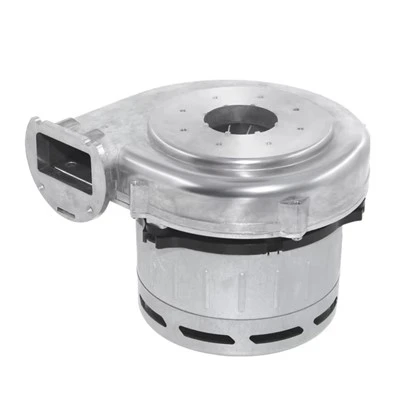
Hey there! As a supplier of Tangential by pass brushless blowers, I've been getting a lot of questions lately about how the bearing type in these blowers affects their service life. So, I thought I'd dive into this topic and share some insights with you all.
First off, let's talk about what a Tangential by pass brushless blower is. These blowers are pretty cool pieces of equipment. They're used in a bunch of different applications, like in dental equipment, small dust extractors, and for creating high-pressure airflows. For example, our 30kPa High Pressure BLDC Blower is a popular choice for applications that need a strong and consistent air supply.
Now, bearings are a crucial part of any blower. They're basically what allows the blower's motor to spin smoothly. There are different types of bearings used in Tangential by pass brushless blowers, and each type has its own impact on the blower's service life.
The most common types of bearings you'll find in these blowers are ball bearings and sleeve bearings. Let's start with ball bearings.
Ball bearings are made up of small metal balls that roll between two rings. This design allows for very low friction, which means the motor can spin more freely. One of the big advantages of ball bearings is their durability. They can handle high speeds and heavy loads pretty well. When a blower is running at high speeds, the ball bearings reduce the amount of wear and tear on the motor. This directly translates to a longer service life for the blower.
For instance, in a BLDC Blower for Dental Equipment, where precision and reliability are key, ball bearings are often the go-to choice. Dental equipment needs to operate smoothly and quietly, and ball bearings help achieve that. They can withstand the constant start - stop cycles and the relatively high - speed operation that dental blowers often experience.
However, ball bearings aren't without their drawbacks. They're more expensive than sleeve bearings. Also, they can be more sensitive to contamination. If dust or debris gets into the ball bearings, it can cause the balls to wear out faster or even get stuck, which can significantly shorten the blower's service life.
On the other hand, sleeve bearings are simpler in design. They consist of a sleeve that the shaft of the motor rotates inside. Sleeve bearings are lubricated, usually with oil or grease. This lubrication helps reduce friction between the shaft and the sleeve.
Sleeve bearings are generally cheaper than ball bearings, which makes them an attractive option for cost - sensitive applications. In a BLDC Blower for Small Dust Extractor, where the cost of the blower is an important factor, sleeve bearings might be used.
But sleeve bearings have their limitations when it comes to service life. They're not as good at handling high speeds as ball bearings. Over time, the lubricant in sleeve bearings can dry out or break down, especially if the blower is used in a high - temperature environment. When the lubricant fails, the friction between the shaft and the sleeve increases, leading to more wear and a shorter service life.
Another factor that affects how the bearing type impacts the service life is the operating conditions of the blower. If the blower is used in a clean environment with stable temperatures, both ball and sleeve bearings can last a relatively long time. But in a harsh environment, like a factory floor with a lot of dust and high temperatures, ball bearings might be a better choice, despite their higher cost.
Let's also talk about maintenance. The type of bearing can influence how much maintenance the blower needs. Ball bearings usually require less maintenance in normal operating conditions. You might just need to check for contamination periodically. Sleeve bearings, on the other hand, need more attention. You have to make sure the lubricant is in good condition and replenish it if necessary. If you neglect the maintenance of sleeve bearings, their service life can be cut short significantly.
In addition to ball and sleeve bearings, there are also ceramic bearings. Ceramic bearings are a newer technology in the blower industry. They're made of ceramic materials, which have some unique properties. Ceramic is very hard and resistant to wear. It also has a lower coefficient of friction than metal, which means less energy is wasted as heat.
Ceramic bearings can offer a very long service life, even in harsh operating conditions. They're less likely to corrode than metal bearings, which is a big advantage in environments where moisture or chemicals are present. However, ceramic bearings are even more expensive than ball bearings, so they're not as commonly used in Tangential by pass brushless blowers.
To sum it up, the bearing type in a Tangential by pass brushless blower has a huge impact on its service life. Ball bearings are great for high - speed and high - load applications, offering a long service life but at a higher cost. Sleeve bearings are more budget - friendly but need more maintenance and aren't as suitable for extreme conditions. Ceramic bearings are the most durable but also the most expensive.
If you're in the market for a Tangential by pass brushless blower, it's important to consider the bearing type based on your specific application. Whether you need a blower for dental equipment, a small dust extractor, or for high - pressure applications, choosing the right bearing can save you money in the long run by extending the blower's service life.
If you have any questions about our blowers or need help choosing the right one for your needs, feel free to reach out. We're always here to assist you in making the best decision for your business.


References
- General knowledge of blower technology and bearing types from industry experience.
- Technical manuals and specifications of Tangential by pass brushless blowers.